
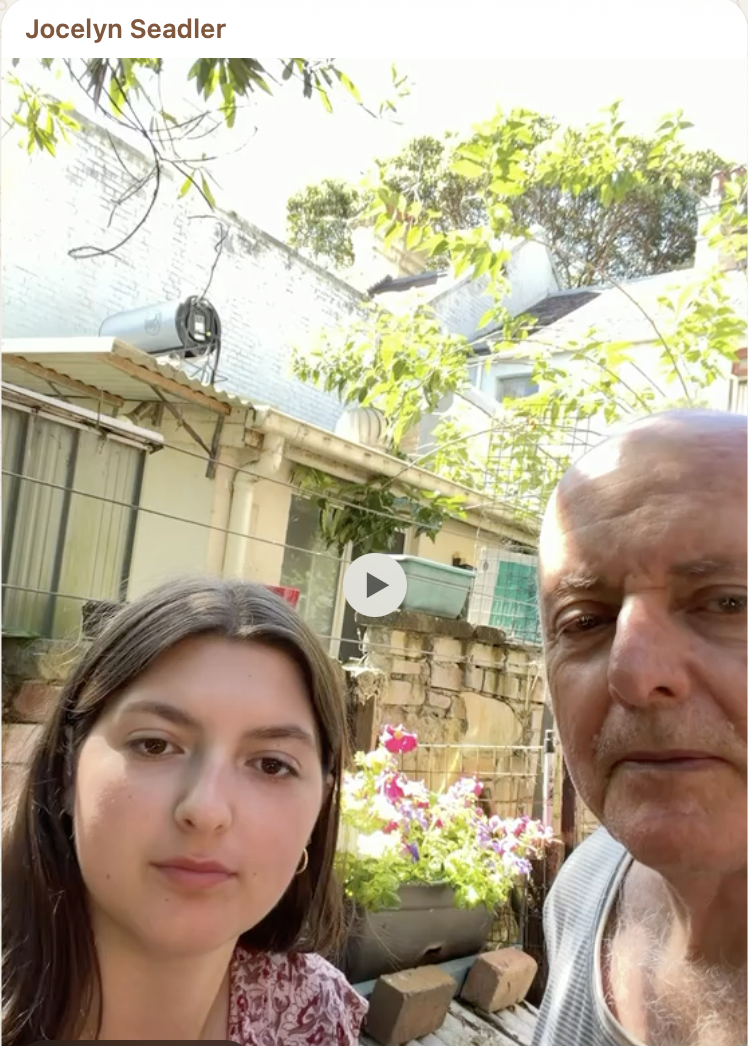
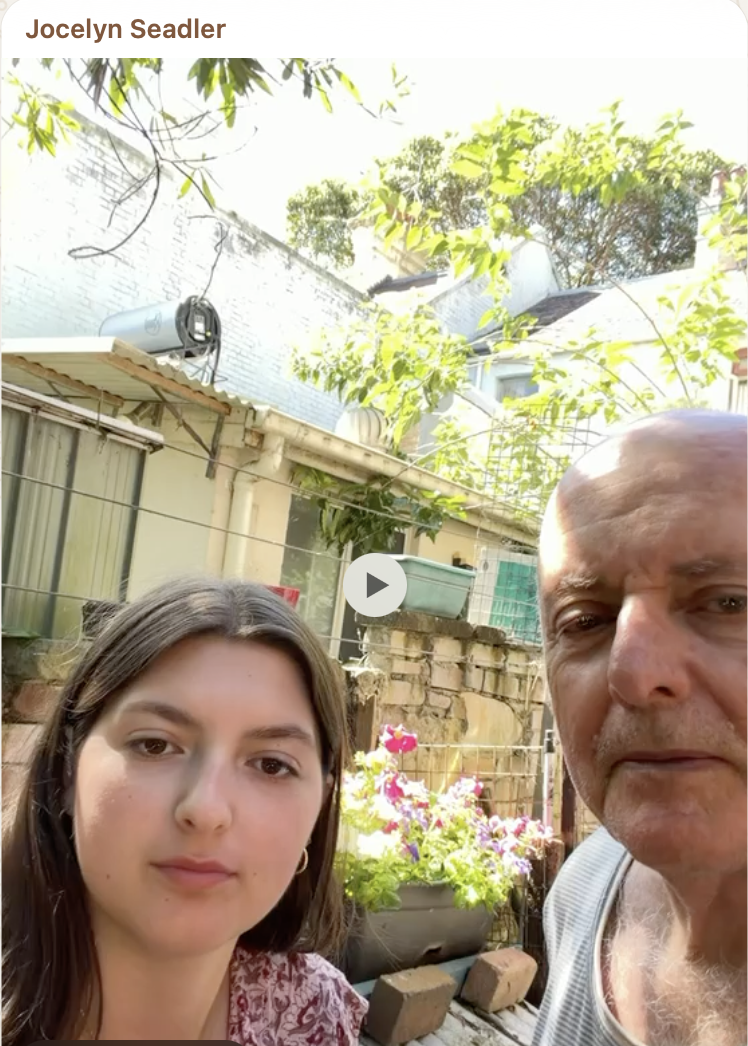
• Three videos showing sampling of bee pollen, a Queen bee laying eggs, and how the bees build and design their hive
Key Points
This blog is an update to the previous post, ‘Native Bee Forage Research’ published on 1 September 2026.
It provides information about the native stingless bee foraging project by Sustainable House intern Jocelyn Seadler, directed by Ros Gloag at the University of Sydney BEE lab.
· Describes pollen identification strategies used in the project to identify potential plant sources of pollen.
· Explains recent research out of Melbourne that studied the impact of garden habitats in urban road verges on native bees and other pollinators.
· Provides a timeline on when this current project will be published.
Hive activities & collecting bee pollen
The process of collecting bee pollen is quite straightforward. It takes about 30 minutes to collect 10 samples of pollen from the bees on a sunny day when the air temperature is above 18 degrees, and the bees are out and about foraging.
This video below shows how we collected pollen from the hives:
Processing the pollen in the lab takes more time as each individual pollen ball has to be stained, imaged, and identified.
The structure of the hive is split into two brooding sections: the advancing front and the retreating edge. The advancing front has a characteristic spiral shape containing newly-built cerumen (tree resin/propolis + beeswax) cells. Pollen that enters the hive from foraging bees are placed in open pots on the advancing front to provide food for developing larvae.
The queen bee will lay her eggs in each open pot that contains pollen. The retreating edge contains darker, resinous cells of young larvae and silken cocoons of pupae. New bees will hatch from this section.
This next video below shows the hive design.
Melbourne research – urban habitat gardens
This paper out of Melbourne highlights the importance of garden habitats instead of traditional lawns in public urban green spaces.
When habitat gardens were added to residential road verges in Melbourne, Australia, species richness, the total number of different species present in an area, and abundance, the number of individual organisms, increased.
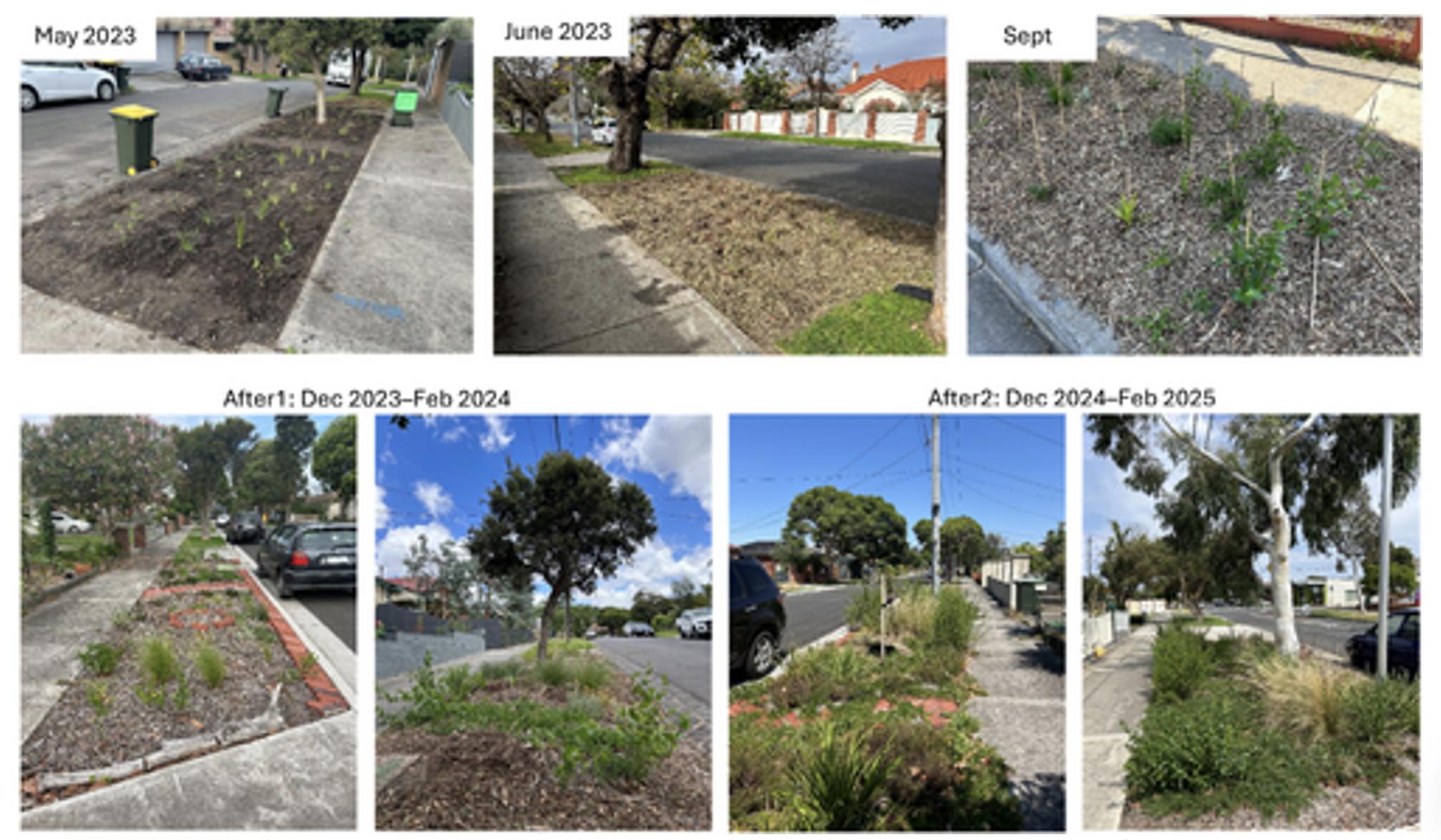
Figure 1: Progress of the nature-strip gardens from May 2023 to February 2025 in the study (Bell et al., 2026). Newly planted nature strips (May–September 2023) were monitored throughout winter and plants replaced as needed. Gardens in the after1 phase of the study (December 2023–February 2024) were small but had started flowering. Gardens in the after2 phase of the study (December 2024–February 2025) were well established.
Overall, total insect abundance was approximately 7 times higher at sites with habitat gardens versus those with traditional lawns.
Compared to other insects such as beetles, butterflies, and moths, bees showed the greatest response to these habitat gardens with approximately five times more abundance at sites with habitat gardens. Hop goodenia (Goodenia ovata) was involved in the greatest insect interaction, most of which were bees visiting the flowers. Native Lasioglossum bees were observed the most at the impact sites compared to Apis mellifera (European honeybee) at the control sites, which shows that despite the widespread, generalist nature of the introduced European honeybee, they did not benefit that much from these gardens.
These results highlight the reliance on native floral resources by native pollinators in urban environments.
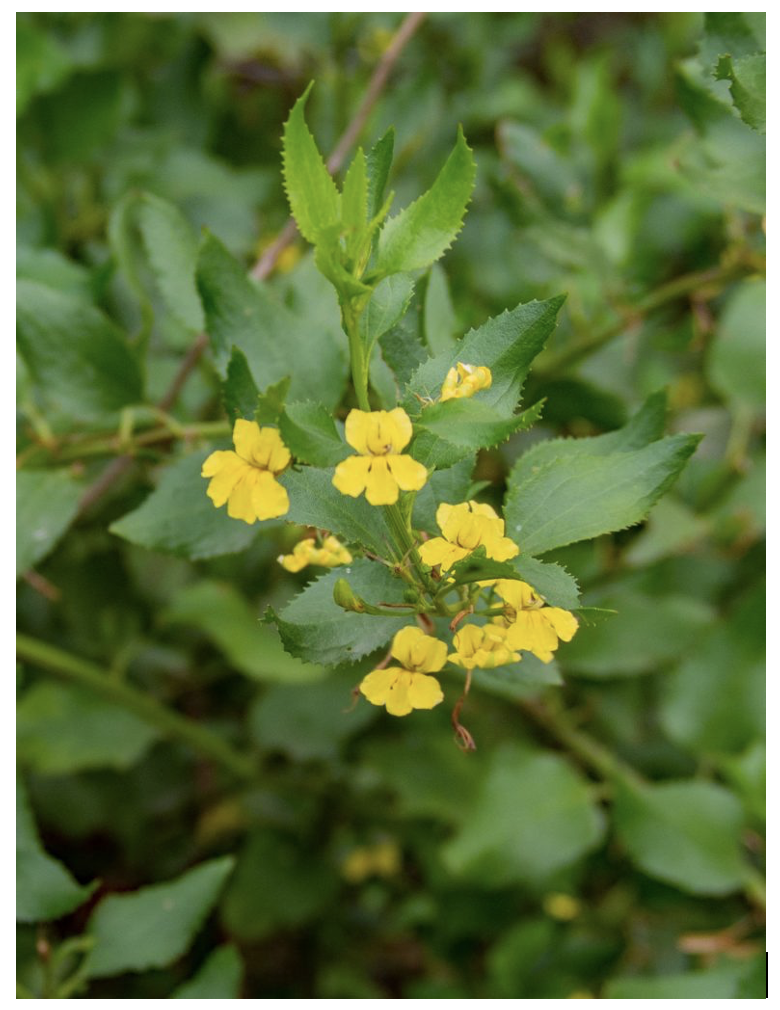
• Figure 2: Hop goodenia (Goodenia ovata). Credit: Swan Bay Environment Association
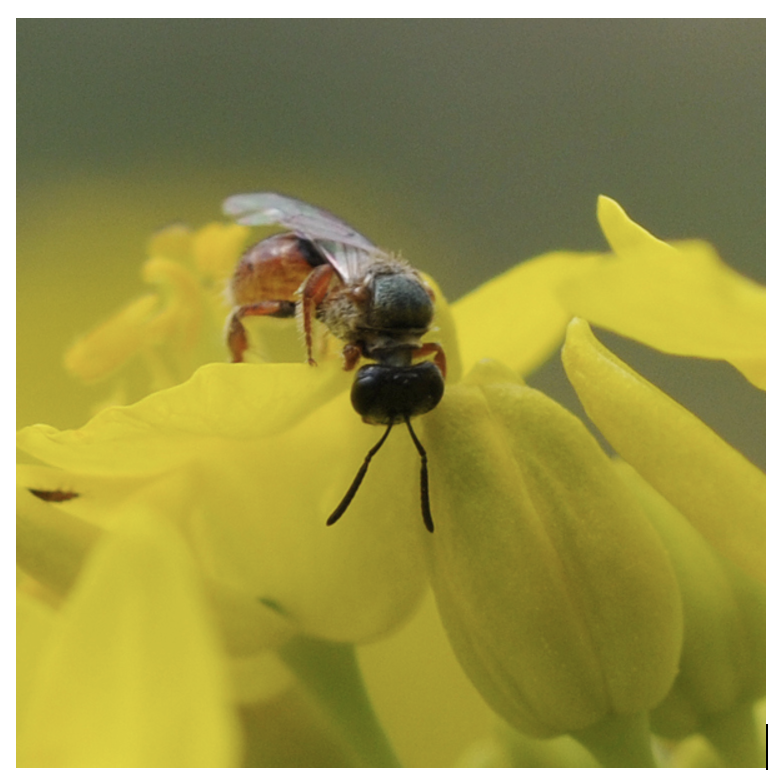
• Figure 3: Lasioglossum bee. Credit: Bees Business.
One strength of this Melbourne research is that it took place over the course of 3 years (May 2023 – February 2025). This longer time frame allowed for collection of a larger dataset compared to our research, which only took place for four months (August – November 2026). Having a longer time frame to collect data would strengthen the results of our own four month long project by adding more data and allowing us to sample plants that may not be flowering during our current timeframe. We’re exploring extending the project through summer to March 2027.
Project Update
Results are expected to be published in November 2026.
by
Jocelyn Seadler,
Intern with Sustainable House
Thank you to Ros Gloag and all at Sydney University Bee Lab for direction and providing access and training for sampling at the Bee Lab.
And thank you to Melissa Ballantyne for the two videos showing how the Queen Bee lays eggs and how the bees design and build hives - see, Sydney Stingless Bees