
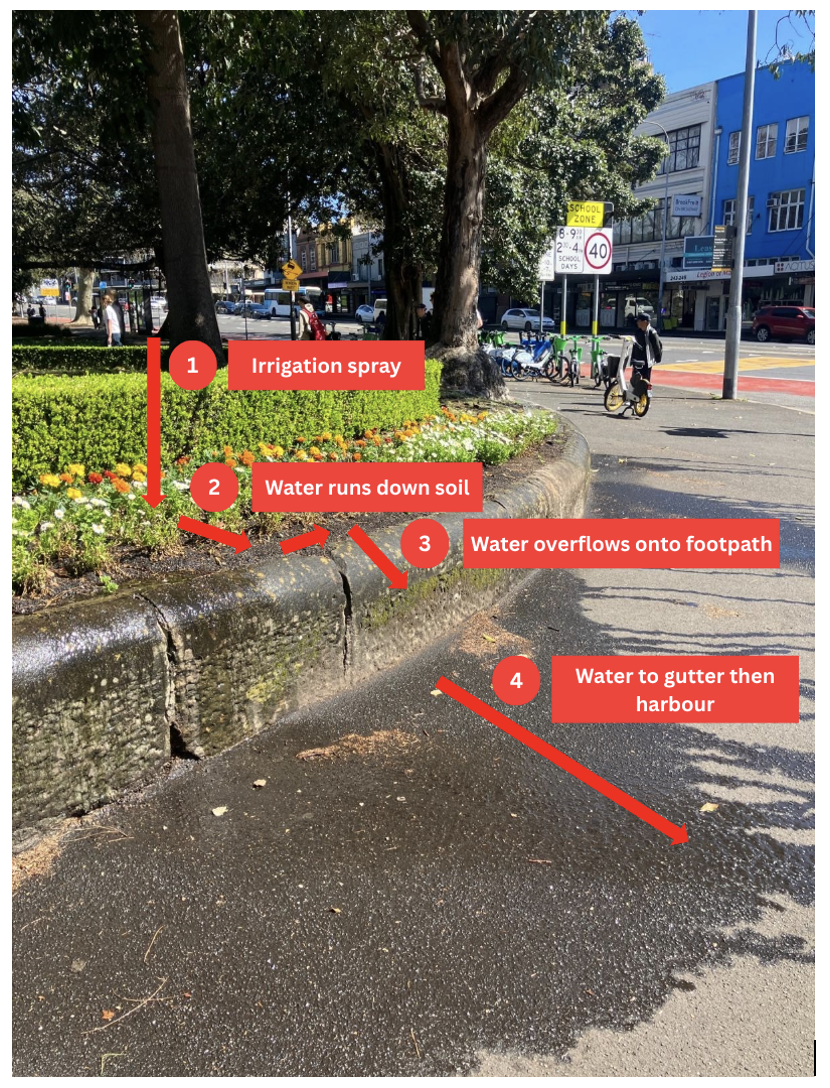
1. Automatic irrigation spray onto surface of Council Garden bed, 9 September 2026
2. Water runs down the sloping garden bed which has bare soil, no mulch
3. Surface of garden bed soil is higher than garden bed and water overflows to footpath below
4. Water and mobilized soil flow down footpath that slopes to road and gutter, eventually to pollute Sydney Harbour with brake linings, sediment, poison sprayed by Council on ‘weed’, nitrogen and phosphorus from Council fertilizers
Alex Smith, Intern with Sustainable House, describes solutions to stormwater pollution.
The existing design in the photo above sets the garden bed soil level with, or higher than, the border, so rain and irrigation overflow straight onto the footpath.
The proven solution is to keep the soil lower than the border, so it acts as temporary storage for rain and irrigation water instead of letting it run off.
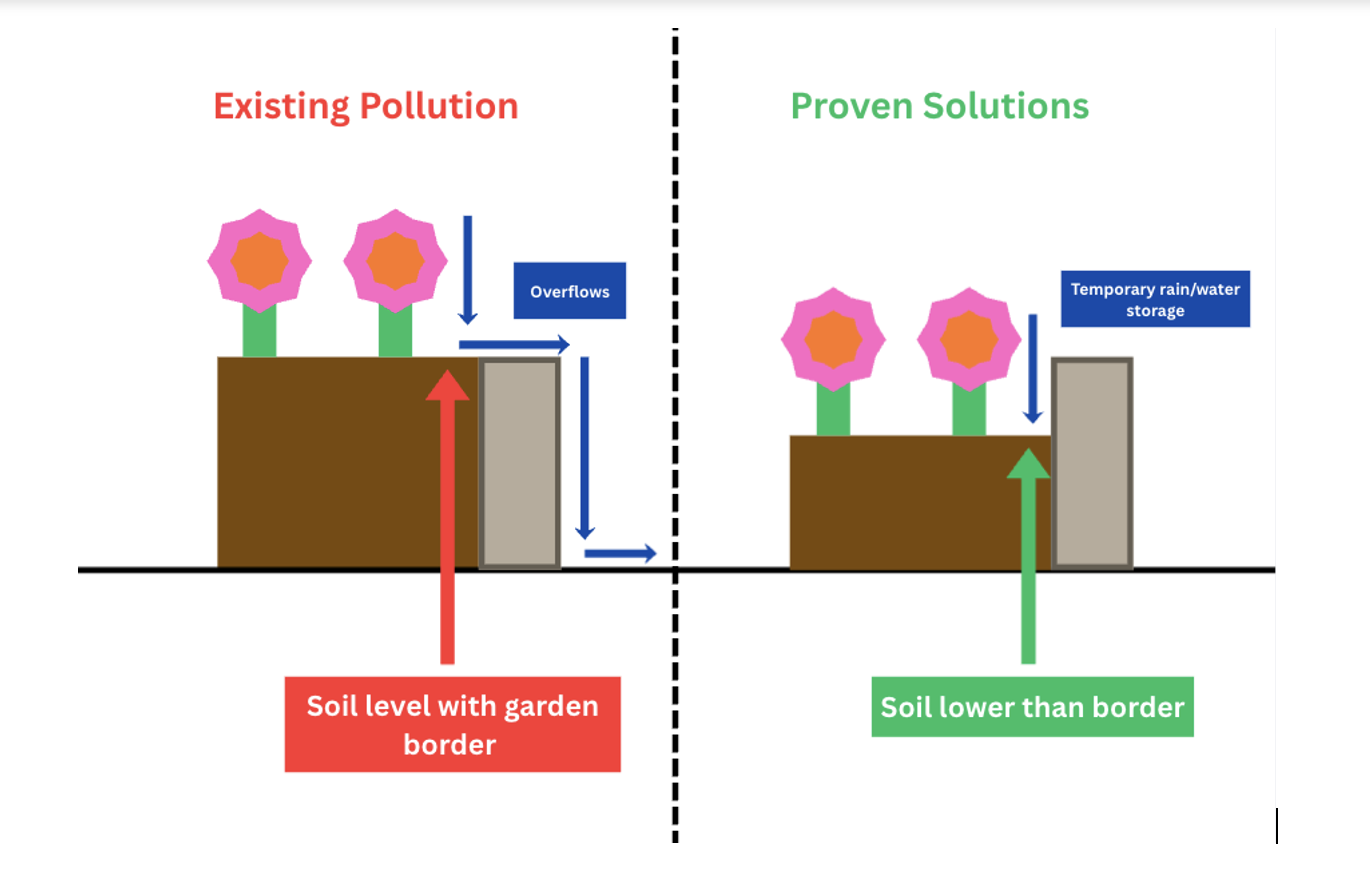
• Get the levels of the bed lower than the garden bed border
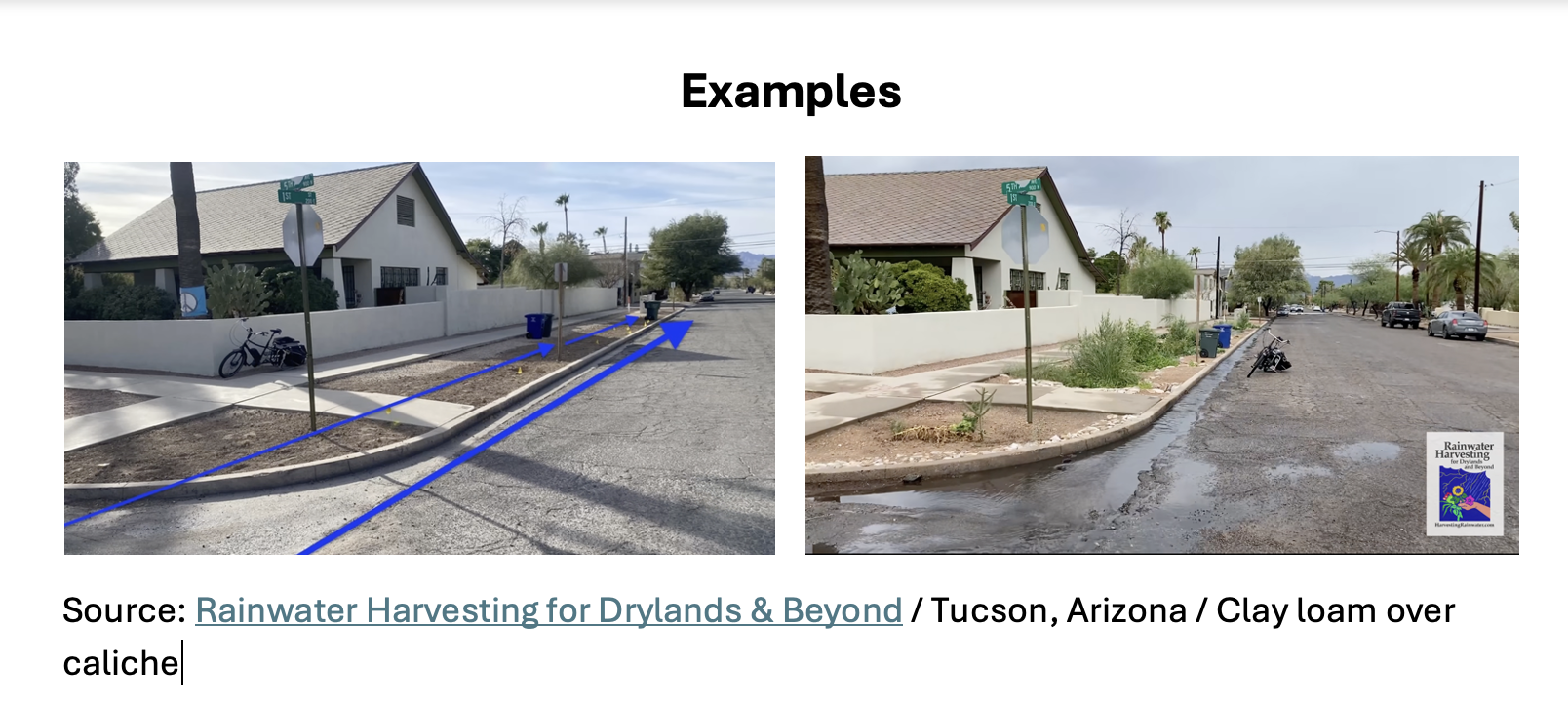
Above: Before and after on First St, Tucson.
The left photo shows the curb cut design with the street runoff (blue arrows) redirected off the road into a street basin. The right photo shows the same basin established and working with one-rock-high check dams that slow and spread stormwater at each basin's inlet, so it soaks into the clay-loam soil rather than eroding it.
Built by Brad Lancaster, “more water falls as rain on our city in an average year than the entire population of the city (over half a million residents) consumes of municipal water (the bulk of which is imported/pumped in at great cost from the Colorado River over 300 miles away) in a year.”
This means the water, naturally, is wasted by design, and this rain bed turns the street's runoff into free irrigation instead of storm-drain waste.
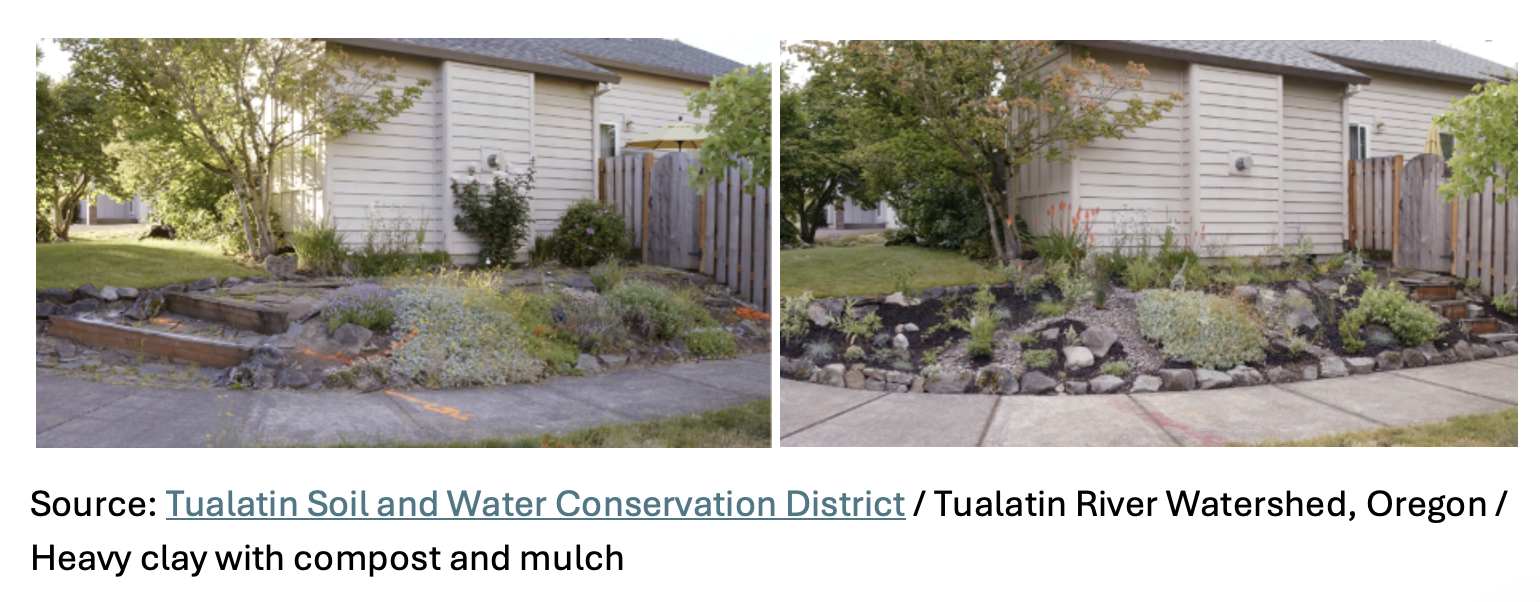
The photos above show a side-yard slope in Oregon, dug into a rain garden basin lined with gravel and compost-amended soil. A downspout redirected in, with wet-tolerant plants in the low basin and drought-tolerant natives on the drier edges.
When a percolation test on this Oregon backyard confirmed the soil was heavy clay, conservationist Dennis O’Connor amended it, rather than ruling the site out, with compost and mulch, “to make the soil a little more spongy so that water can infiltrate more quickly.”
This shows clay soil isn’t a reason to abandon a rain garden, it’s simply amended so it can absorb water like any other soil.
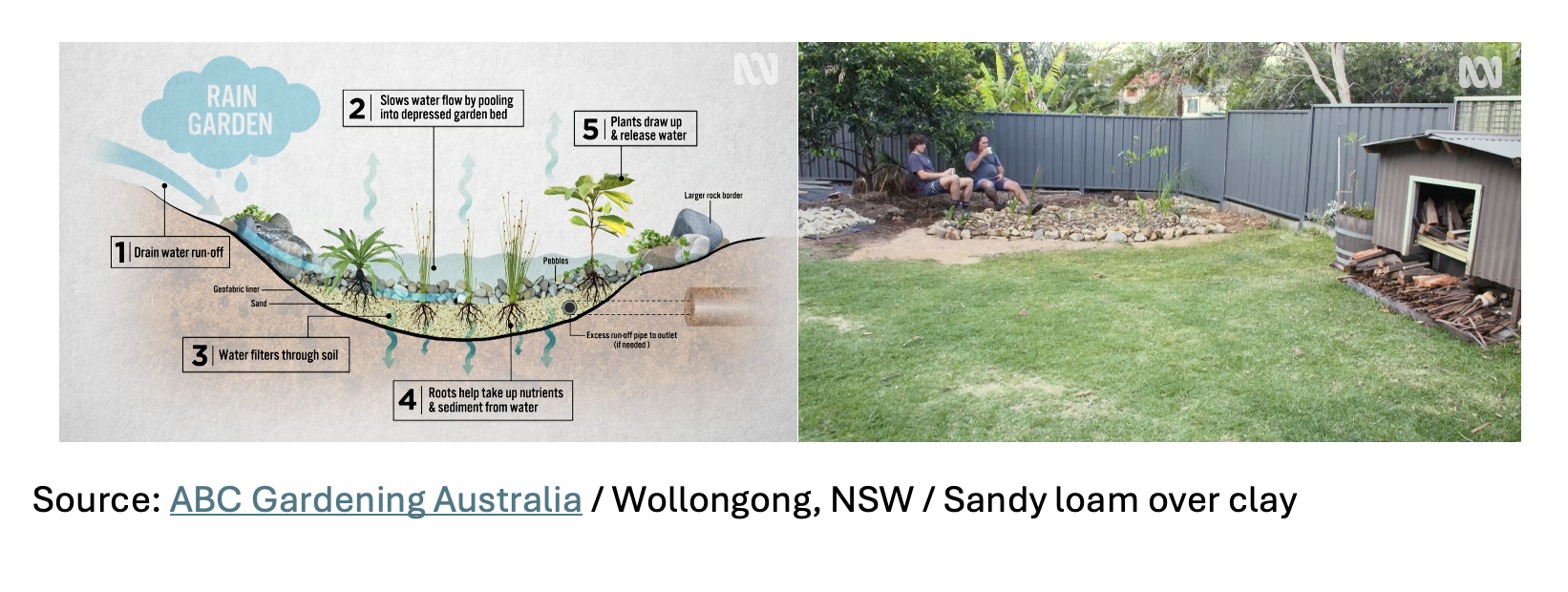
Here, above, is an example of a rain garden working in action, done by Clarence Stockee in Wollongong, NSW.
A layered geofabric, sand and gravel let rainwater pool and filter through, becoming a self-draining garden. As Clarence puts it, “It's a natural, low-cost solution to consider for drainage with the added benefit of bringing in a slice of the Australian bush into your yard.”
A raingarden isn’t an expensive specialist fix; it’s a straightforward solution to a poorly drained yard.
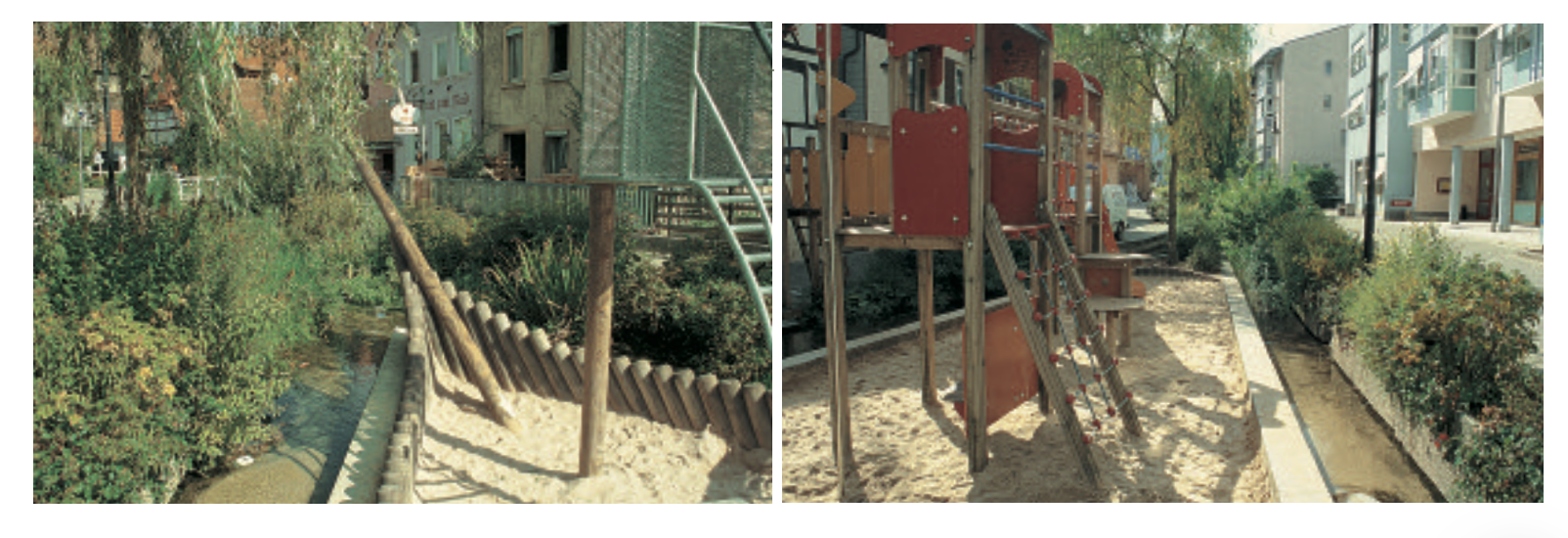
• Source: Rain Gardens: Managing water sustainably in the garden and designed landscape / small town, Germany
Here, an example of a stream/rain garden system in a German town’s main-street play area.
A natural stream is diverted around a ship-themed sandpit with dense planting alongside. This turns everyday stormwater flow into a play and habitat feature right in the street.
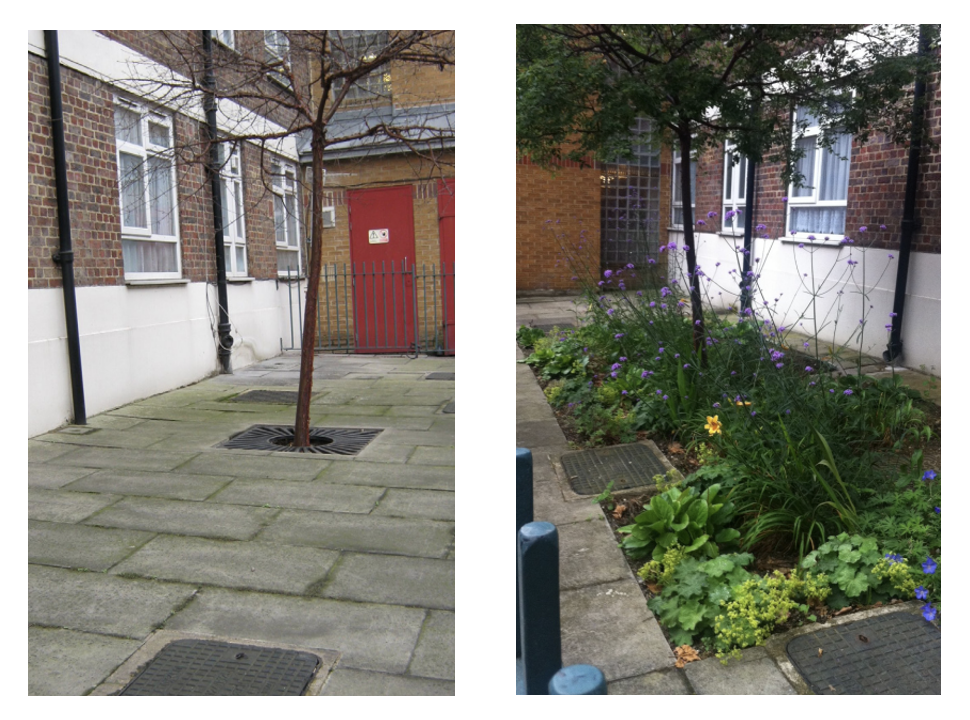
• Source: Rain Garden Guide / Kingsmead Way, Hackney, London / London Clay
Before and after a paved, tree-pit courtyard converted into a planted rain garden by Groundwork London’s Green Team.
Runoff from the roof and paving now soaks into the bed instead of running straight to the drain. The author states that “If your soil is clay it will require much more improvement than a light, sandy soil,” meaning that clay can handle a rain garden with a bit more amending such as compost or sand.
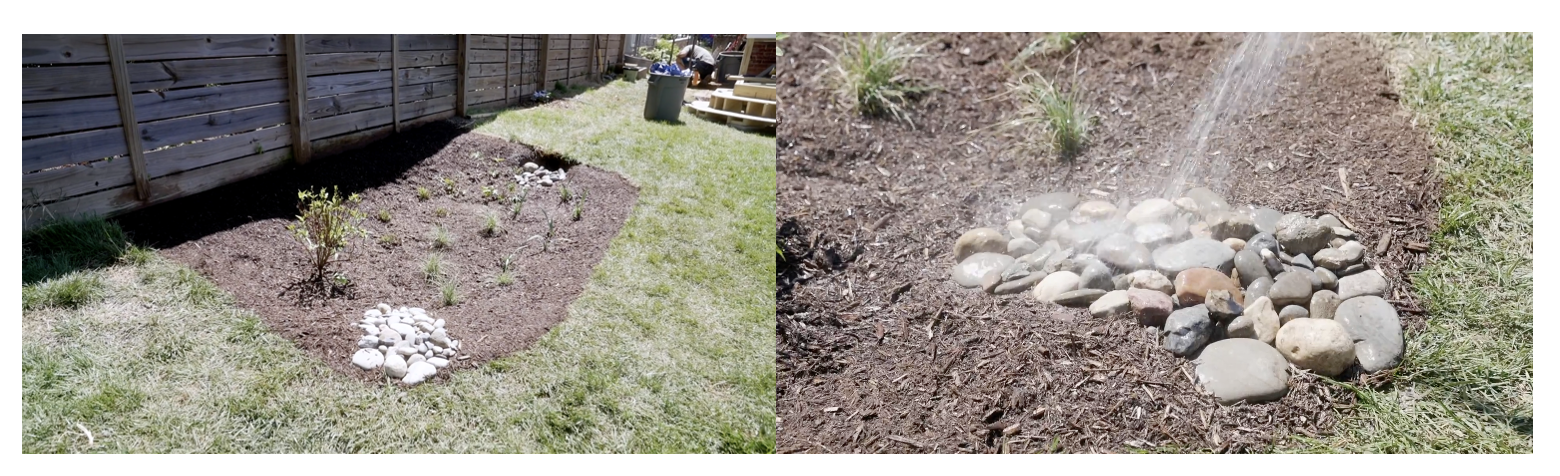
• Source: Alliance for the Chesapeake Bay / Chesapeake Bay / clay-based subsoil under topsoil
An example of a residential rain garden dug into clay subsoil, with a rock spillway slowing water at the inlet and river-rock check dams lower down. It takes about three years for the plants to establish and shade out weeds, then the clay-based garden runs itself.
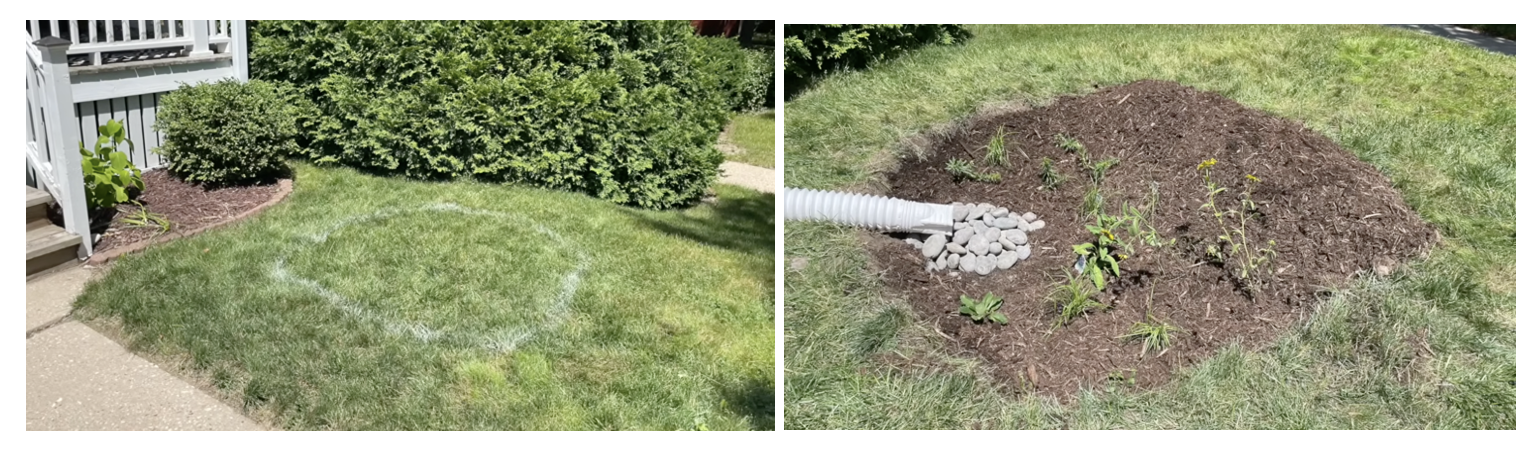
• Source: Milwaukee Metropolitan Sewerage District / Milwaukee, Wisconsin / Heavy soil with compost mix
Shown here is the before and after of a bed dug out in a Milwaukee front yard, mixed with compost to help heavy soil drain.
The downspout was redirected over a bed of stones to stop erosion, and native plants are planted. This is an example of a low-cost way to reduce roof runoff into the storm sewer.
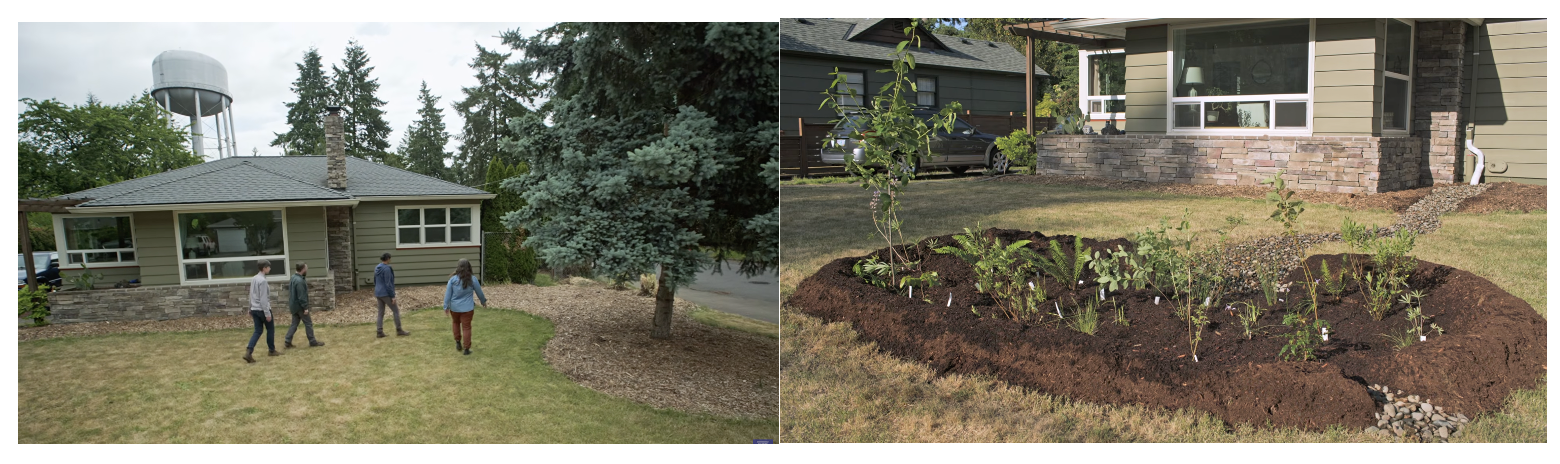
• Source: This Old House / Portland, Oregon
The before and after of a plain grass front-yard converted into a rain garden in Portland. A downspout is redirected through a rock-lined channel into a backfilled, planted basin to catch the roof’s runoff. As Kathy Shearin, the soil/water conservationist for the project puts it, “This is a fantastic project because you're addressing water conservation and keeping your water on site for the ground recharge.” This project was built in just one weekend for under $800.
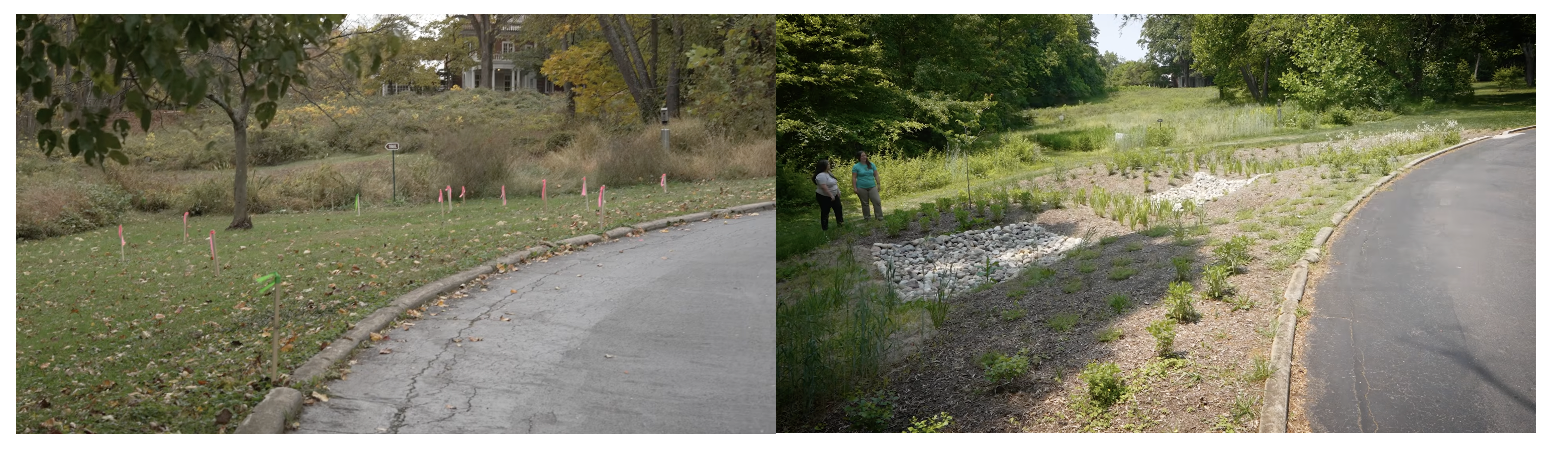
• Source: Nature Forward / Chevy Chase, Maryland
Before and after of the side of a driveway raingarden at Woodend Nature Sanctuary. The finished two-basin system is connected by a stone spillway to slow water and stop erosion. A curb cut channels driveway runoff into the first basin, overflowing into a second lower basin and then into a native conservation landscape. Over 700 native plants were installed and now soak up runoff before it reaches Rock Creek a quarter mile away.
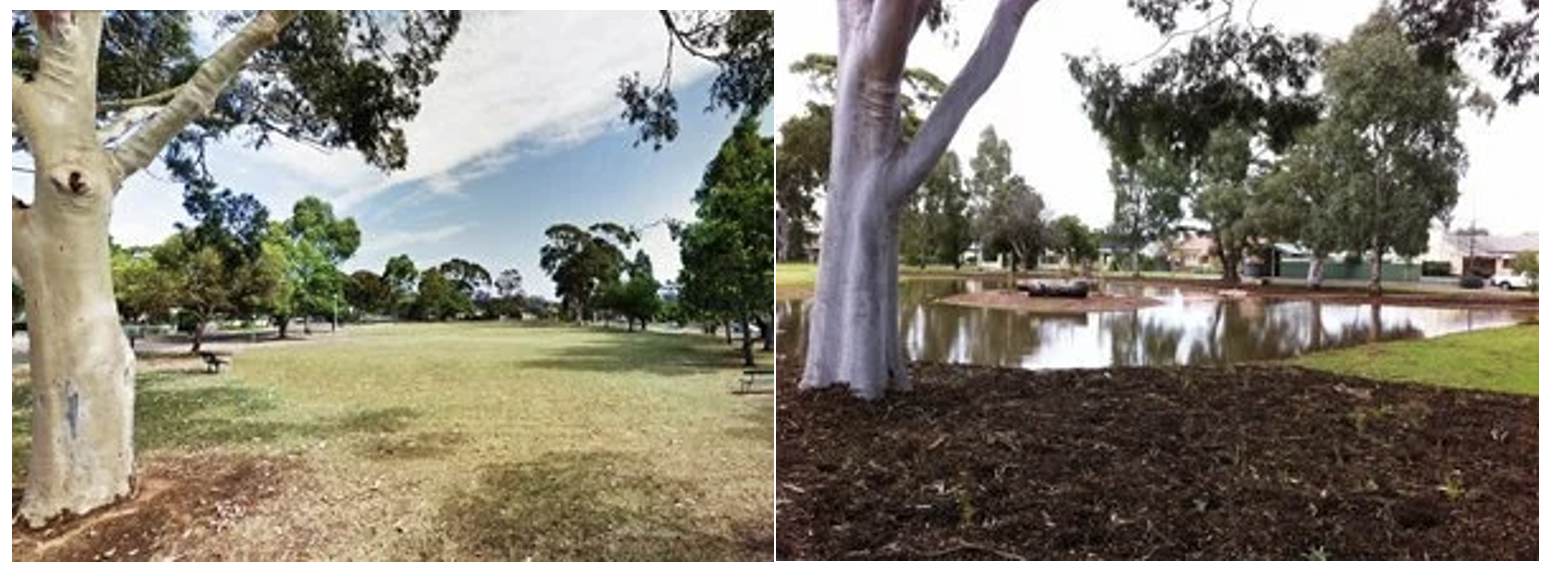
• Source: Resilient South / Daw Park, South Australia
A flat, open reserve that became a rain garden pond fed by stormwater from far away. Water soaks into the reserve’s soil to cut downstream flooding, with overflow filtered through the pond’s planted edges. Indigenous plants provide bird cover and cooling, which cuts the need for irrigation in a region facing less rainfall and more intense storms.
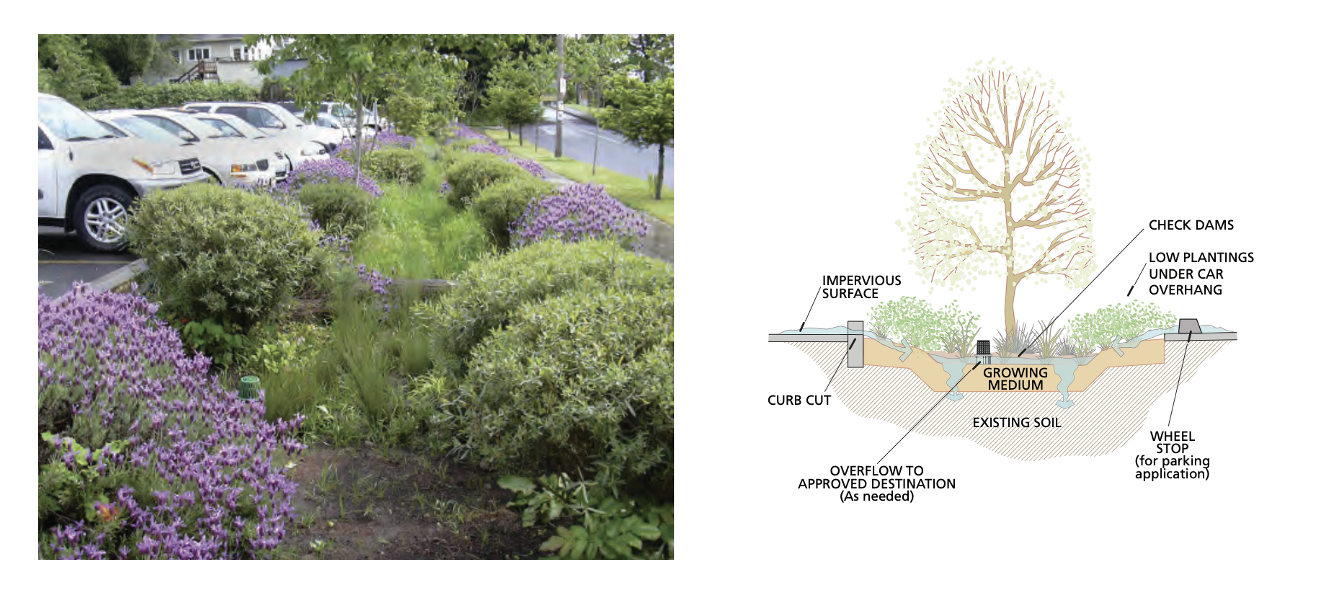
• Source: Stormwater Solutions Handbook, City of Portland Environmental Services / Portland, Oregon
A vegetated swale with a planted parking lot strip that catches runoff through a curb cut, slows it with check dams, and lets it filter down through the growing medium, with overflow piped away if it fills.
The handbook notes that where soils don’t drain well, the swale is simply lined and connected to a drywell instead. This is another example of a real council standard designing around poor drainage rather than avoiding it.
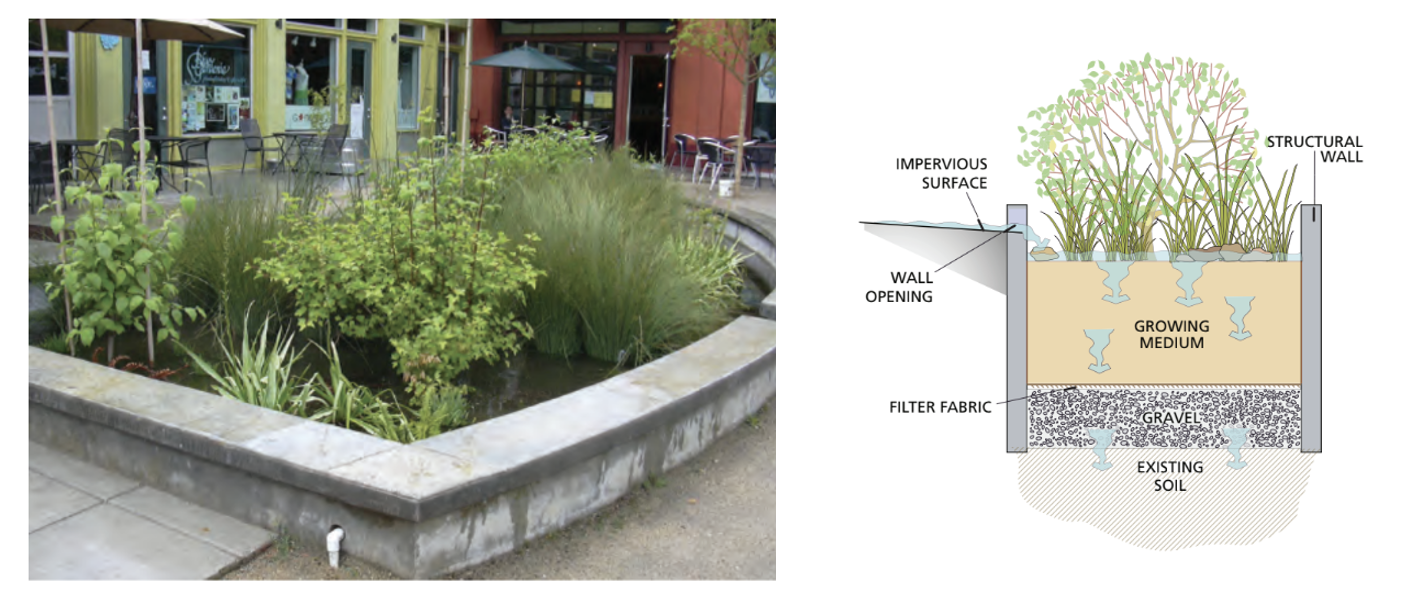
• Source: Stormwater Solutions Handbook, City of Portland Enviromental Services / Portland, Oregon
An infiltration planter that is a raised, walled bed built directly into a street-corner plaza, densely planted and thriving right outside a cafe. Runoff enters through a wall opening, filters down through the growing medium, gravel and filter fabric, and soaks into the ground below. Another City of Portland stormwater standard, showing this kind of feature can fit neatly into busy commercial streetscapes.
Rain Gardens Work in Clay Soils
Clay soil comes up a lot in rain garden design, and the standard reference book on the topic, Rain Gardens: Managing Water Sustainably in the Garden and Designed Landscape by Nigel Dunnett and Andy Clayden, treats it as something you plan around rather than something that rules a site out.
The book gives a simple hand test for figuring out what soil you’re dealing with, “Clay soils will be sticky and clumpy—such soil has poor infiltration” (p.143). Clay isn’t treated as a mystery or special problem case; it’s just one of three basic soil types (sandy, silty, clay) a designer identifies before starting, which is the same way any site is checked.
Once you know it’s clay, the recommended fix is amendment, not abandoning the site, “If you have to position a rain garden on a site with poor infiltration then the topsoil could be replaced by a ‘rain garden mix,’ as recommended by the organization ‘Rain Gardens of West Michigan,’ comprising 50 per cent grit or sharp sand, 20-30 per cent topsoil, and 20-30 per cent organic compost, and the subsoil loosened and any compaction relieved” (p. 142). In other words, a clay-soil rain garden is a normal design task with a normal recipe, that is to swap out the top layer of soil for a better-draining mix and loosen the ground underneath.
The same thing applies beyond rain garden basins, to swales as well, “Where the natural soil type is relatively impervious, such as a heavy clay soil, gravel, grit or sharp sand can be incorporated into the top layer” (p. 108). This confirms the fix isn’t a one-off trick for basins specifically, but the standard approach across the whole family of water harvesting features, whenever the ground is heavy clay.
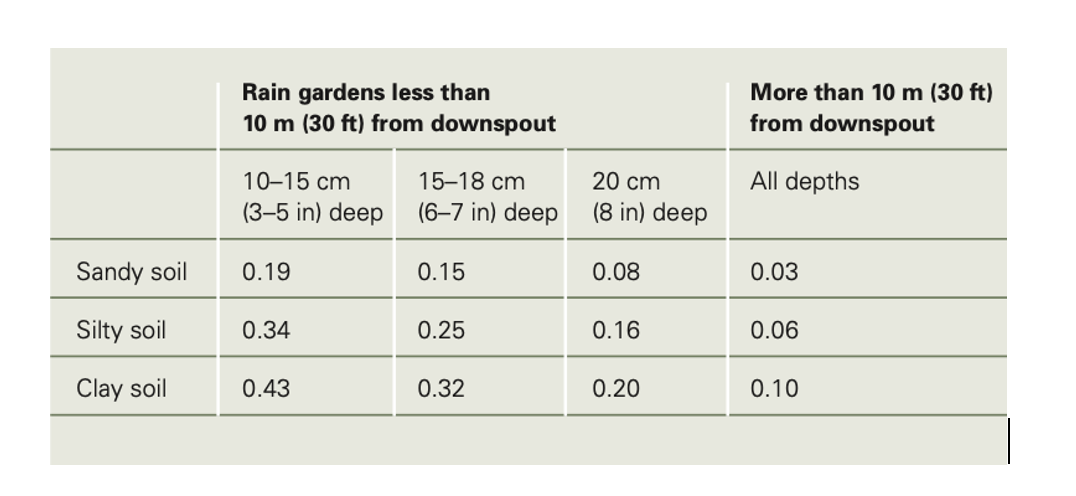
Clay isn’t treated as an edge case that gets designed around; the book’s own rain garden sizing table gives clay soil its own size factor, listed right alongside sand and silt. Clay has factors of 0.43, 0.32, 0.20, and 0.10 depending on depth (p. 143).
A clay-soil rain garden is simply built larger to compensate for slower drainage; the table assumes clay as a normal, expected condition and not an exception.
by
Alex Smith, intern with Sustainable House