
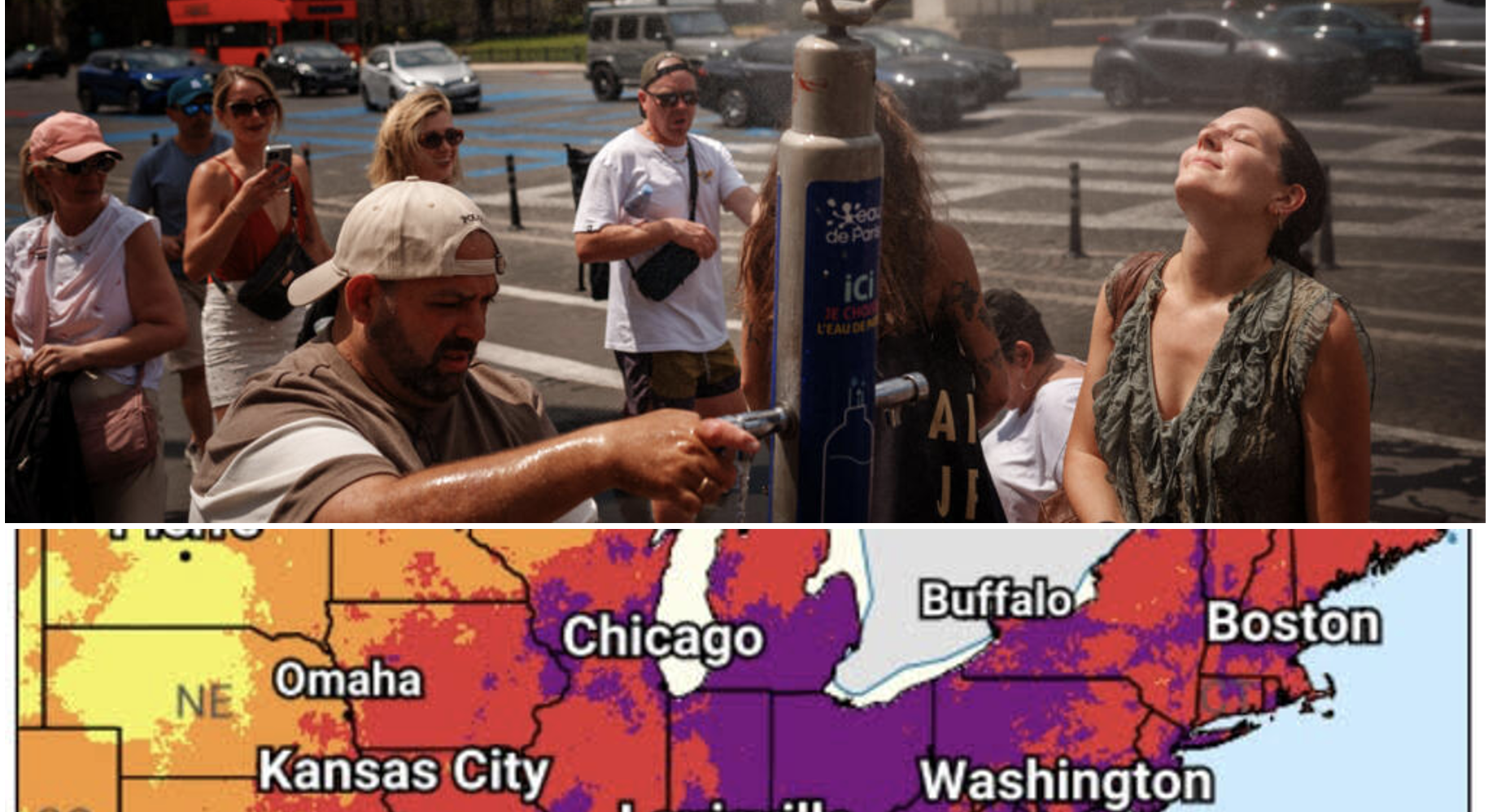
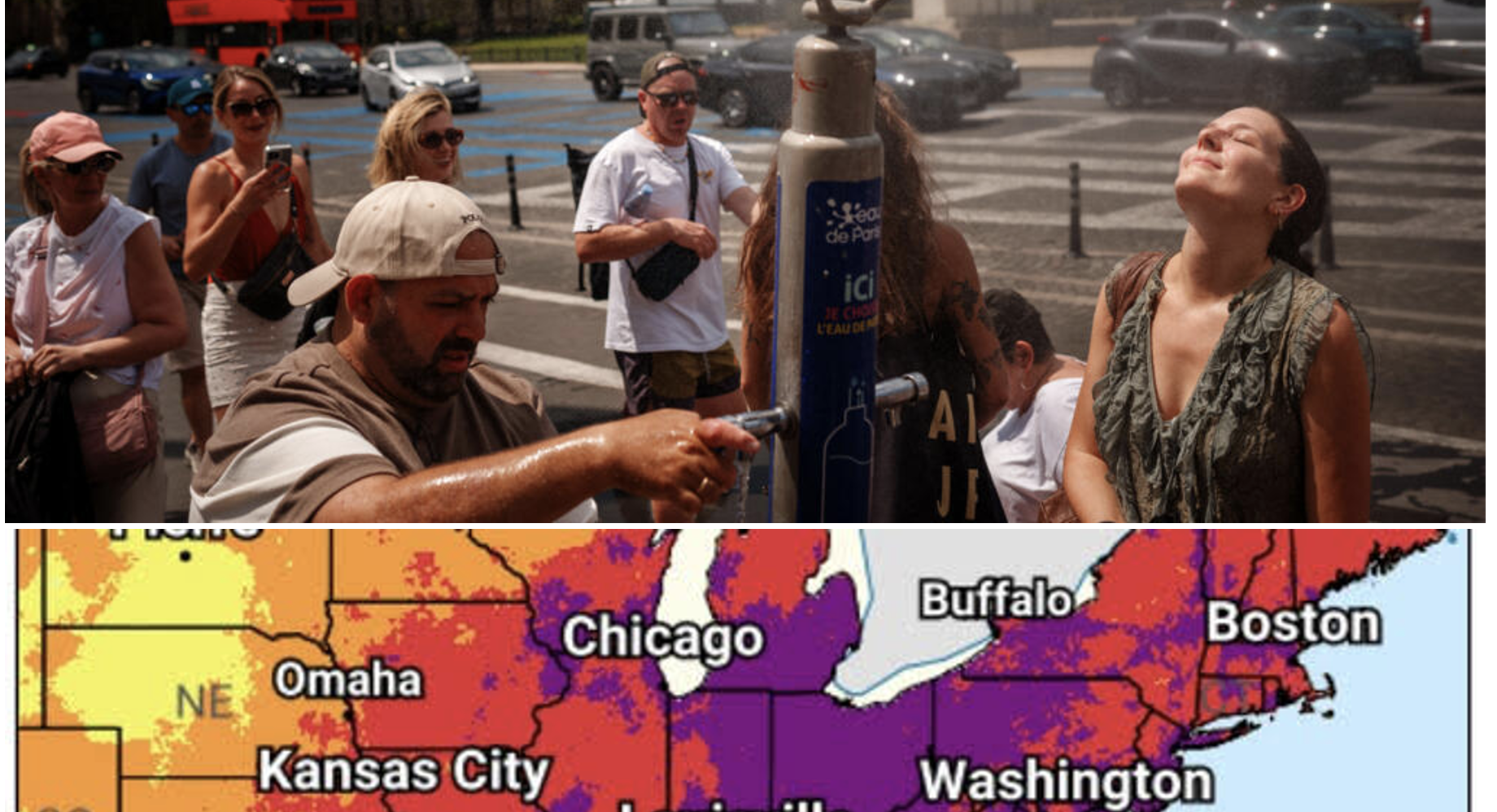
• A tale of two countries, France (upper half of the photo) and the United States (lower half of the photo), June and July 2026
When Heat Stops Being Just Weather
by
Gabriel Weitzer, intern with Sustainable House
I’m writing this in the first week of July, 2026 and the last week of my internship in Sydney, Australia, before I head back home to the United States.
A Personal View from a Burning Paris
I recently read Sarah Wilson’s article, Notes from a Burning Paris, and what stood out most was not only how hot Paris had become, but how completely the heat had taken over normal life.
Living in Paris, Wilson writes from inside the heatwave rather than looking at it from a distance. She describes moving between cafés, offices, parks and gyms because her apartment had become too hot to safely stay in. Her top-floor room under one of Paris’s dark zinc roofs reportedly reached around 43°C during the day and stayed close to 38°C overnight.
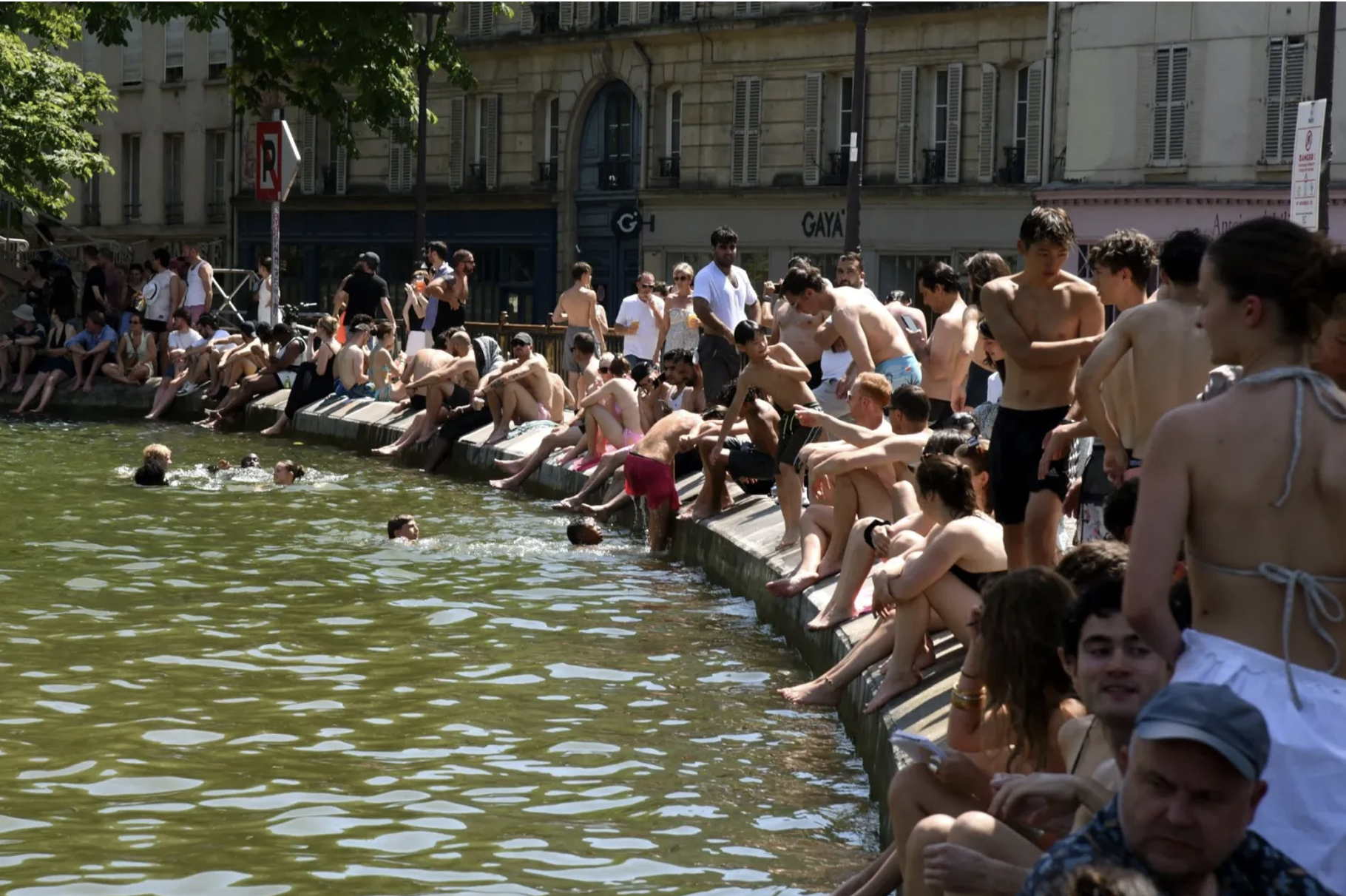
• Parisians cooling off with water wherever they could find it
She tried cold showers, wet sheets, frozen socks, ice bricks and even sleeping in a tent. None of it really lasted. Within a few hours, everything would become hot again.
That is probably the article’s biggest strength. It shows what extreme heat actually feels like when you are living through it. It is not only uncomfortable. It changes where you sleep, whether you can work, how much water you need and how you spend your entire day.
At the same time, Wilson’s perspective is very pessimistic.
She repeatedly describes the heatwave as a form of “collapse.” Her main point is that the heat itself is only one part of the problem. The bigger issue is what happens when electricity, transport, water, hospitals, schools and normal routines all begin struggling at the same time.
That idea makes sense, but the article spends much more time describing failure than discussing what cities can actually do about it.
There are a few examples of people adapting. Parks stayed open overnight, mosques welcomed people onto cooler tiled floors, cafés became unofficial cooling centres and residents shared information through WhatsApp groups. The city also opened designated cool spaces.
But most of these responses are about surviving the heatwave once it has already arrived.
Wilson briefly mentions parks, rooftop gardens and the removal of some car lanes, but she does not go very far into longer-term solutions such as more street trees, shade, lighter roofs, better ventilation, water-sensitive design or changes to building standards.
That does not make the article unhelpful. It just means it works best as the human side of the story.
What the Paris Heatwave Was Actually Like
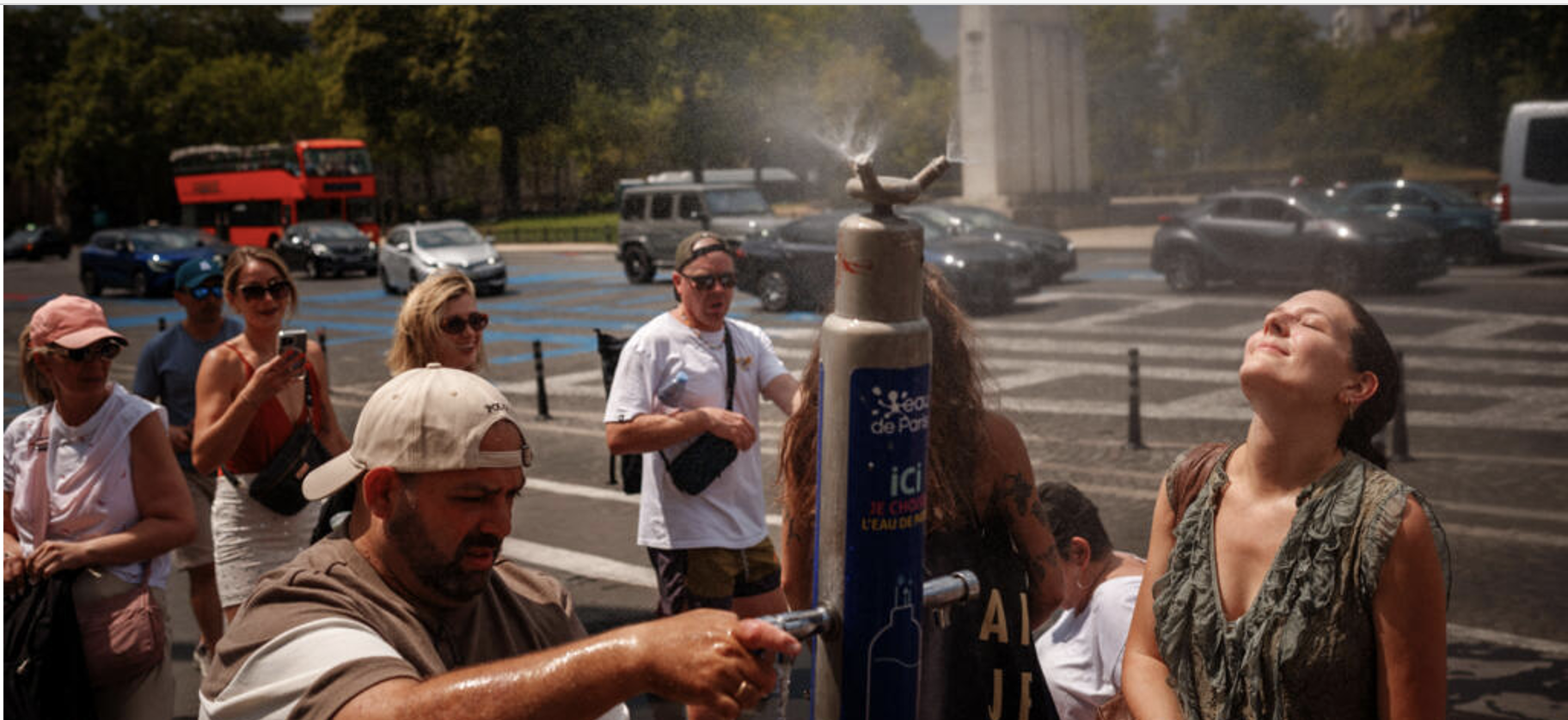
• Mist sprays in the streets were crowded
The wider facts support her description of a city under serious pressure.
Paris reached 40.9°C, setting a new June record. South-western France reached 44.3°C, while parts of the country were more than 15°C hotter than average.
The heat was also not limited to France. Britain recorded its hottest June temperature, Spain experienced its highest average June temperature since records began in 1950, and Italy placed 16 cities under its highest heat alert.
One of the most dangerous parts was the lack of cooling at night.
Temperatures in Paris reportedly barely dropped below 30°C. Roads, roofs and buildings absorbed heat throughout the day and slowly released it after sunset. That meant homes and people had very little time to recover before the next day began.
Paris is particularly vulnerable because so much of the city is built from stone, concrete and zinc. Many streets have limited tree cover, and many buildings were designed for a cooler climate.
European homes are often built to retain warmth during winter. Strong insulation is useful in cold weather, but if a building does not have enough shade or ventilation, the same design can trap heat during summer.
Only about 20% of European homes have air conditioning, compared with roughly 70% in Australia.
Air conditioning helps, but it is not a complete solution. It increases electricity demand, raises household bills and does not help people who cannot afford it or whose homes are not suitable for it.
The heatwave also affected much more than housing.
Schools, festivals and gym classes were cancelled. Hospitals were reportedly dealing with dehydration and heart problems. Roads buckled, trains were disrupted and passengers were reportedly trapped underground in extreme heat.
A nuclear power station reportedly reduced or stopped production because the river water used for cooling had become too warm. At the same time, electricity demand was increasing because more people were using fans and air conditioners.
This is where Wilson’s idea of collapse begins to make more sense.
More heat leads to more cooling demand. More cooling demand puts pressure on the electricity grid. Power problems can then affect water, transport and health services.
The strongest part of her article may actually be the way people responded to one another.
Residents shared advice through group chats. Friends offered spare rooms, offices and studios. Cafés allowed people to stay for hours. Parks and canals became gathering places.
When normal systems struggled, community support became part of the emergency response.
The United States Heat Dome
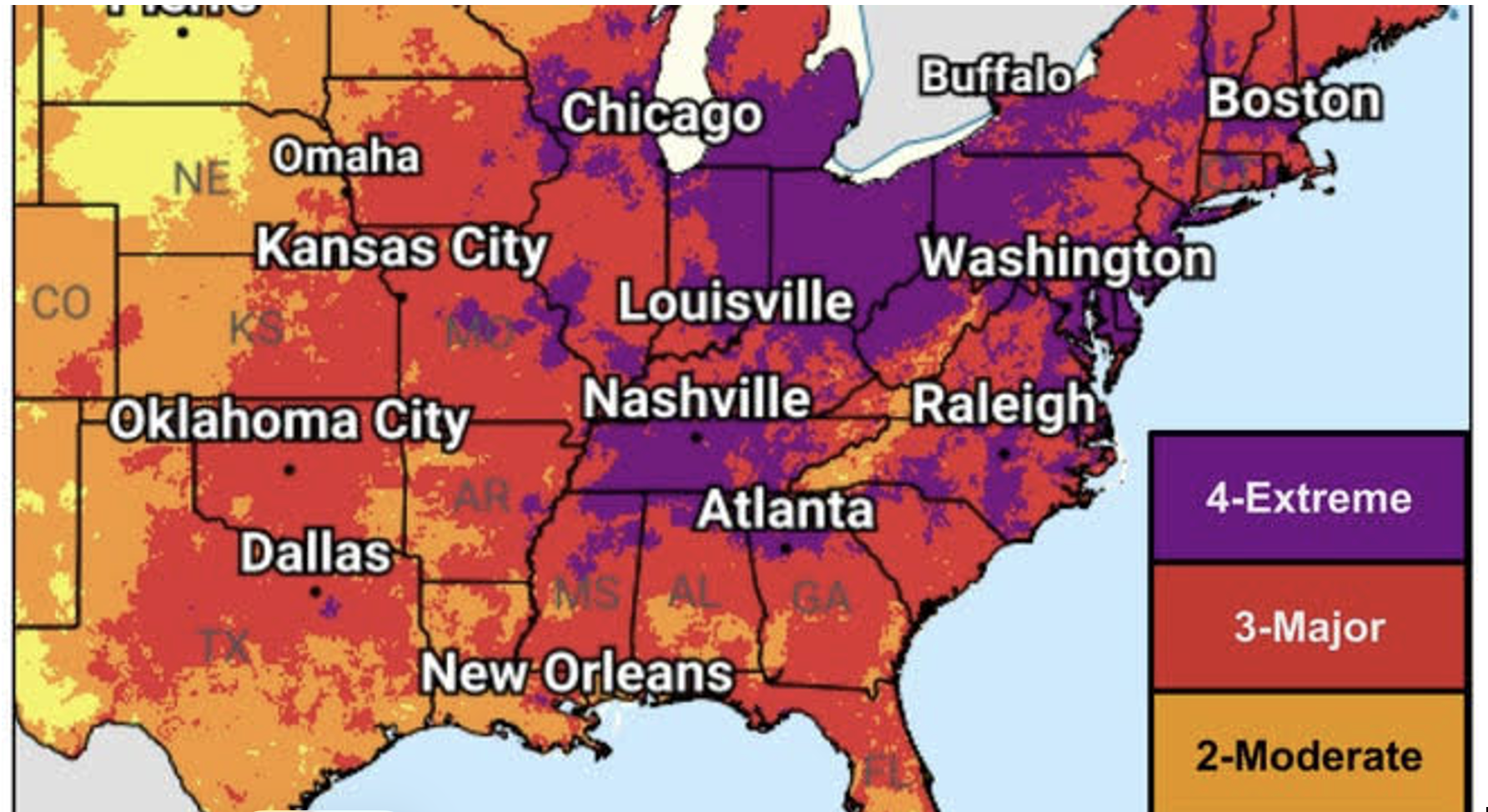
• 1July 2026 heat map of the United States
At the same time, the United States has been dealing with its own major heat event.
A heat dome forms when a strong area of high pressure traps hot air over a region. The system limits clouds and rain, allowing heat to build over several days. High humidity can make conditions feel even worse than the actual temperature.
The heat dome has covered large parts of the central and eastern United States, including the Midwest, Southeast, Great Lakes, Mid-Atlantic and Northeast.
Temperatures have reached the 90s and low 100s Fahrenheit, or roughly the mid-30s to low-40s Celsius. In some places, heat index values have reached around 105–115°F, which is roughly 40–46°C.
The National Weather Service has placed parts of the country under Major or Extreme HeatRisk.
These warnings matter because the danger is not limited to people exercising outside. Extreme heat can affect anyone without reliable access to cooling and water, especially older people, children, outdoor workers and people with health conditions.
Hot nights are also a major concern. When buildings and bodies do not cool down overnight, the risk grows with each day of the heatwave.
The United States has more air-conditioned buildings than Europe, but that creates a different problem.
Electricity demand rises sharply as millions of homes and businesses turn on cooling systems at the same time. The US Department of Energy issued an emergency order for the PJM electricity grid, which supplies power to about 67 million people.
Grid operators warned that electricity demand could approach or break previous records.
A blackout during extreme heat would be dangerous for anyone who depends on air conditioning or powered medical equipment. It shows the limits of treating air conditioning as the only answer.
The heat dome has also affected public events, outdoor work and major sports.
World Cup matches in cities including Kansas City, Philadelphia and the New York–New Jersey area have taken place during dangerous heat and humidity. Players have used mandatory hydration breaks, while fans and workers may still spend long periods outside travelling, waiting in lines or working around stadiums.
Cities in the United States also experience the same urban heat-island problems seen in Paris.
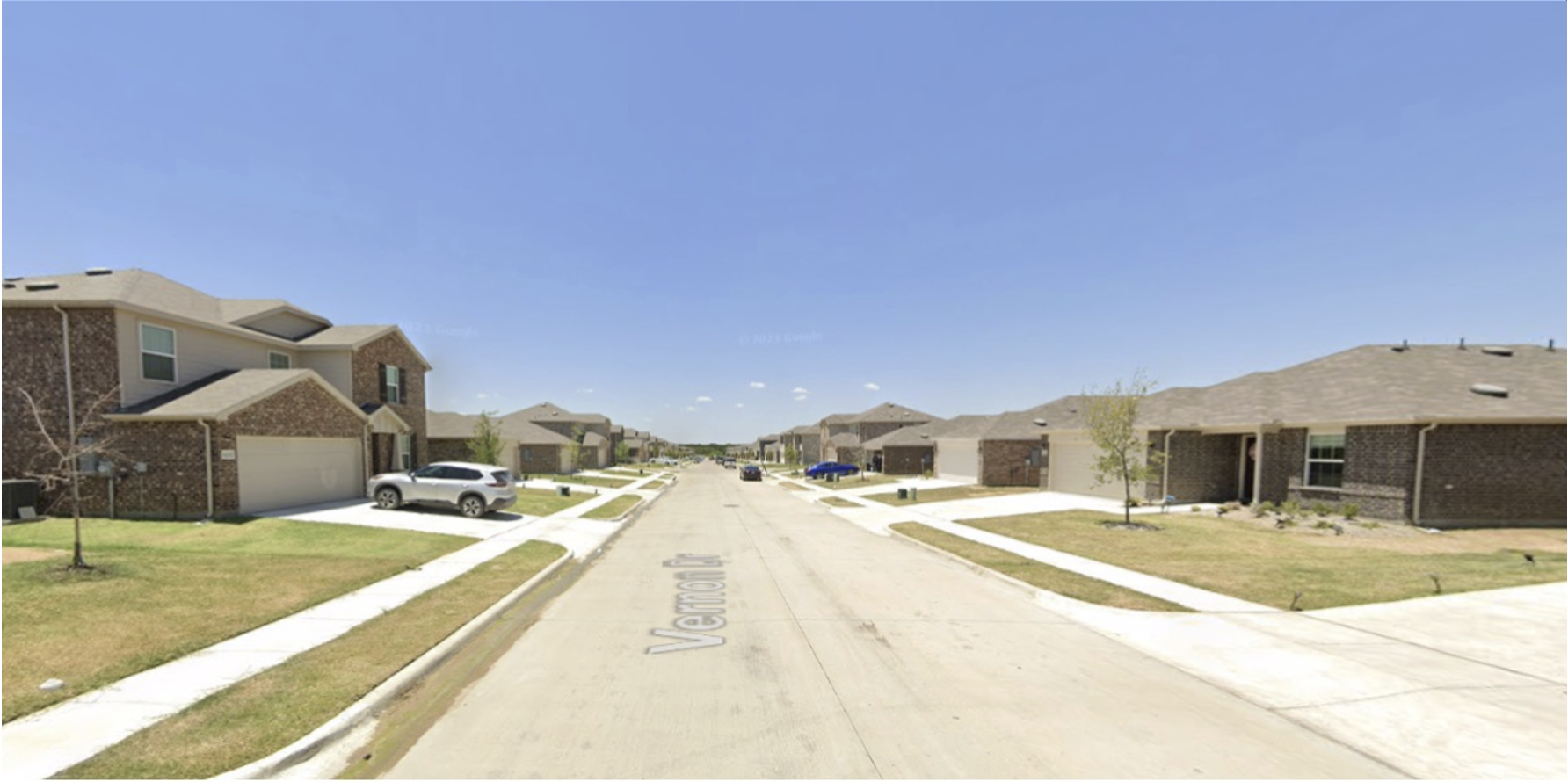
• No trees = hotter days and nights, more aircon, higher energy bills
Roads, roofs, buildings and car parks absorb heat during the day and release it slowly at night. Dense neighbourhoods can therefore remain much hotter than areas with more trees, vegetation and open land.
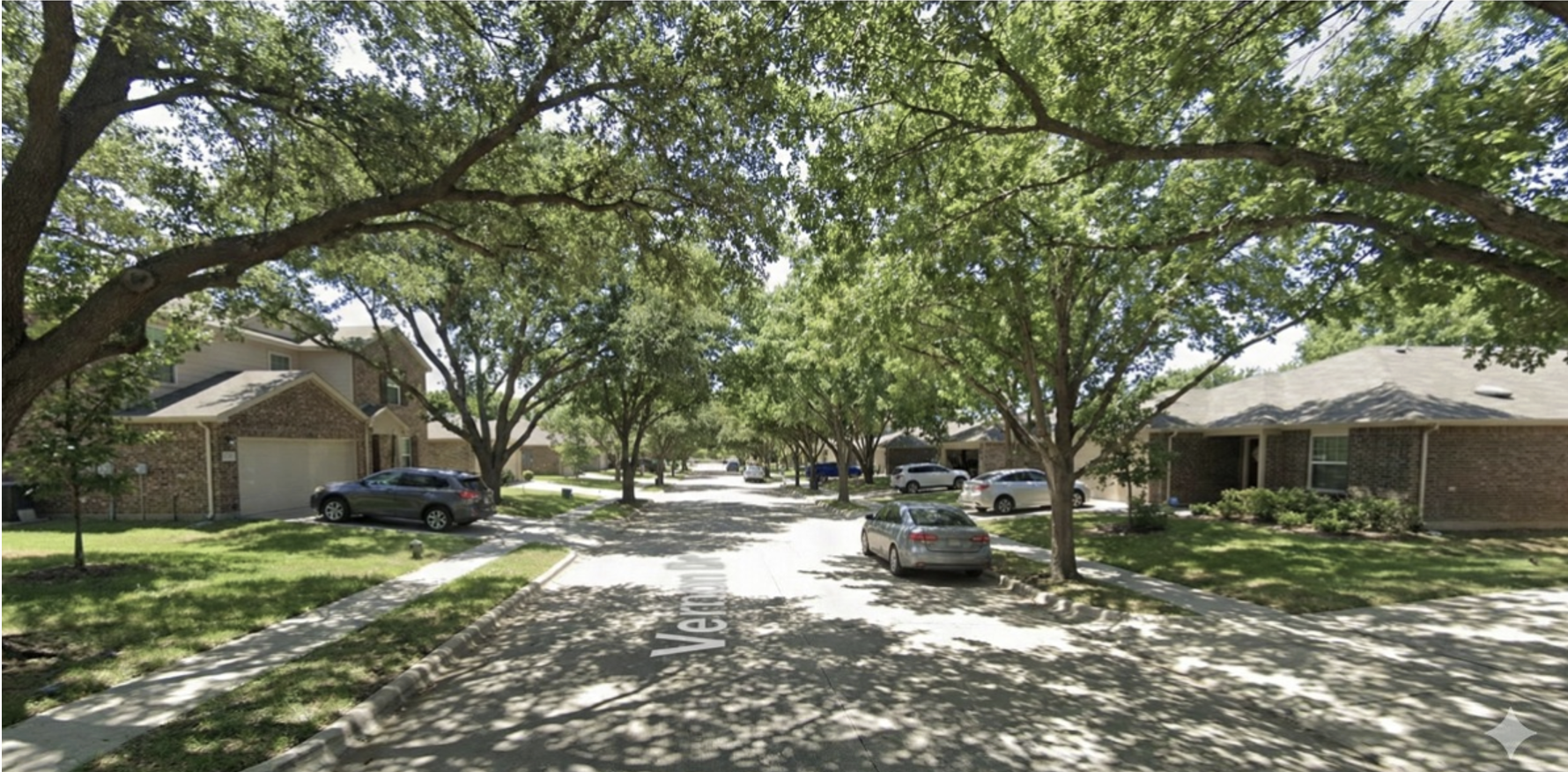
• More trees = cooler days and nights, less or no air con, lower energy bills - trees are free air conditioners
The Paris heatwave and the American heat dome are not exactly the same, but they reveal many of the same weaknesses.
Both involve dangerous daytime temperatures, hot nights, pressure on electricity systems and serious risks for people without access to reliable cooling.
What This Could Mean for Australia
It would be easy to look at Europe and the United States and think this is happening somewhere else.
However, Australia is already seeing signs of the same wider trend.
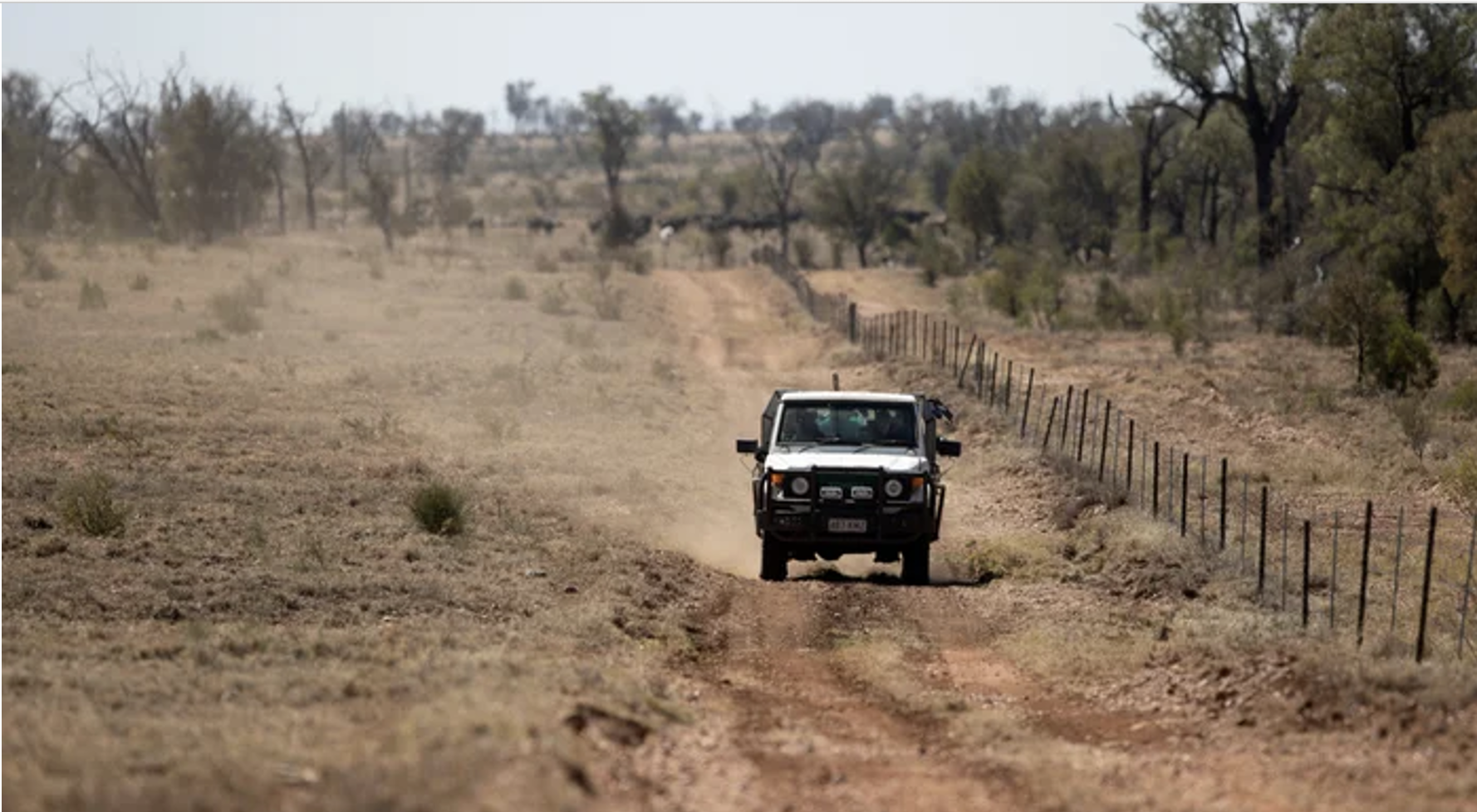
• Much of inland Australia is hot, and looks like this where farmers have cut down trees
Sydney and Melbourne experienced their warmest starts to winter on record. Both cities recorded above-average temperatures on almost every day in June.
Adelaide also had an unusually warm start, while Hobart and Canberra experienced temperatures well above normal.
This does not automatically mean Australia’s next summer will be the hottest ever. Weather patterns are complicated, and climate drivers do not always create the same result.
But the conditions are concerning.
Forecasters expect hotter and drier weather in south-east Australia. El Niño could increase the risk of heatwaves, drought and bushfires.
Southern Hemisphere jet streams and storm tracks have shifted further south, meaning that some rain-producing weather systems now pass below Australia instead of moving across it.
At the same time, more high-pressure systems are bringing clearer skies and warmer daytime temperatures.
Ocean temperatures in the Tasman Sea are also well above average, helping direct warmer and more humid air over south-eastern Australia.
Melbourne may be especially vulnerable because of low dam levels and reduced rainfall.
The Bigger Picture
The larger point is that the heat in Paris and the United States is not happening in isolation.
Different countries are experiencing different versions of the same problem: heat arriving earlier, lasting longer and affecting systems that were built for a cooler climate.
Australia may be more familiar with high temperatures than Europe, and many Australian homes have air conditioning. But familiarity does not remove the danger.
Australian cities still have large areas of concrete and asphalt, uneven tree cover and homes that can become dangerously hot. Air conditioning also becomes less reliable if electricity demand rises too far or power fails.
There’s good data and solutions in a research project to trial options to cool Australian cities, Street Coolers, another project by Sustainable house, and the data is here.
The lesson from Paris is not that cities are helpless.
It is that waiting until people are sleeping in parks and searching for air-conditioned cafés is already too late.
Cities need more shade, more trees, better-designed homes, lighter roofs, cooler public spaces and stronger emergency plans.
Wilson’s article focuses heavily on collapse.
The wider evidence suggests something slightly different.
The risks are real, and they are getting worse. But cities still have choices about how they prepare, what they build and where they spend their money.
Extreme heat may be becoming more common.
That does not mean we should accept cities becoming impossible to live in.
by
Gabriel Weitzer, intern with Sustainable House
Sources
● Sarah Wilson, “Notes from a Burning Paris,” This Is Precious, 27 June 2026.
● ABC News, “Australia’s heatwave history offers lessons for sweltering Europe,” 25 June 2026.
● World Meteorological Organization, “Records fall as extreme heat grips Europe,” 2026.
● Schwaab et al., “The role of urban trees in reducing land surface temperatures in European cities,” Nature Communications, 2021.
● National Weather Service, “NWS HeatRisk” and national heat forecasts, June–July 2026.
● Reuters, “‘Heat dome’ threatens sweltering conditions for World Cup fans, players,” 30 June 2026.
● Reuters, “US issues emergency order for PJM Interconnection as heatwave looms,” 30 June 2026.
● Milton Speer and Lance M. Leslie, “Australia’s next summer isn’t guaranteed to be the hottest yet – but it’s looking likely,” The Conversation, republished by The Guardian, 30 June 2026.