

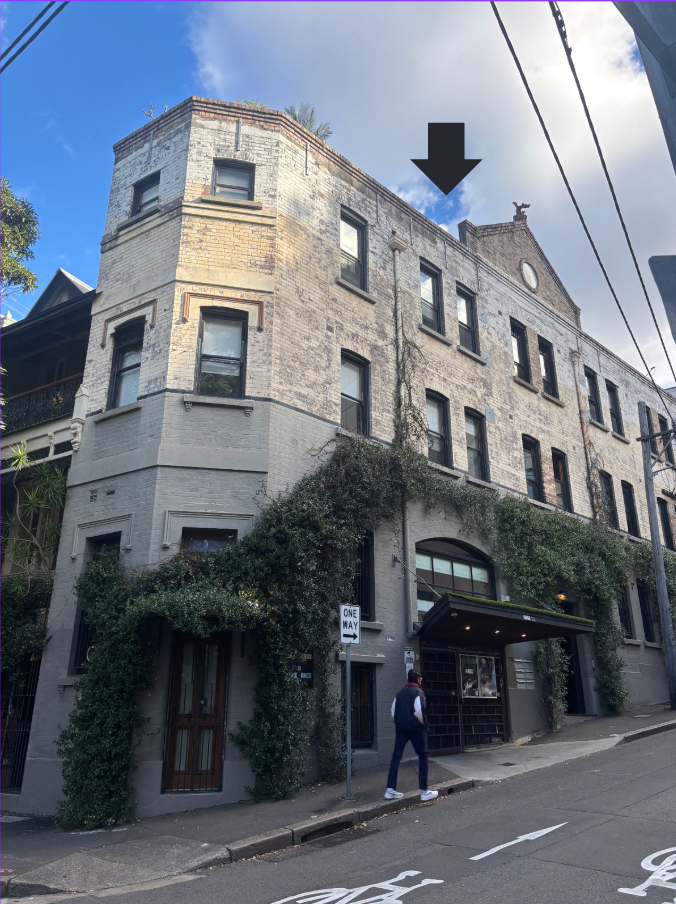
• Street View of Knox Street Bar, Chippendale, with arrow pointing to beehive location on the roof
Hi, my name is Gabe Weitzer, and I am currently an intern for Michael Mobbs at the Sustainable House. My six week internship ends next week, 3 July. Being from Minneapolis, Minnesota in the US, I have enjoyed the opportunity to work, travel around Australia, and to experience another country, research and better understand urban farming in Chippendale.
Recently, I have had the chance to visit Bjorn Godwin at Knox Street Bar to check out his urban bee farm. The Bar is located at Garage, 11 Knox Street, Chippendale NSW 2008 (Entrance via 21 Shepherd Street)

• Cocktails - some are made from urban bee honey at Knox Street Bar
A bee farm (or apiary), is a place where managed beehives are kept to produce honey, as well as support pollination of flowers, fruit trees and other plants and trees which depend on bees. These bee farms do not need to be in rural areas, as they can be on rooftops, in gardens, or other sheltered city spaces.
At Knox Street Bar, Bjorn has kept beehives on his roof for around eight years. He keeps these hives on the roof because it keeps the bees separated from both children and most other members of the public. This bee farm is just another way the Knox Street Bar takes sustainability seriously, as it also uses Coolseats outside the Bar to compost its lemon waste – lemons are used in most cocktails.
Bjorn’s beehives provide us with a strong example of how food can be produced within the city instead of being transported in from a distant farm. This is done through the bees collecting nectar and pollen from flowering plants in the Chippendale area. This allows Bjorn to harvest this honey three times a year. He collects around 50 kilograms of honey, depending on the health of the colonies. This honey that is collected is then used to create unique cocktails, which creates a direct connection between the rooftop hives and what customers are drinking downstairs. The purpose of the honey in these drinks is that it provides a local ingredient that also provides sweetness and flavors the cocktail.
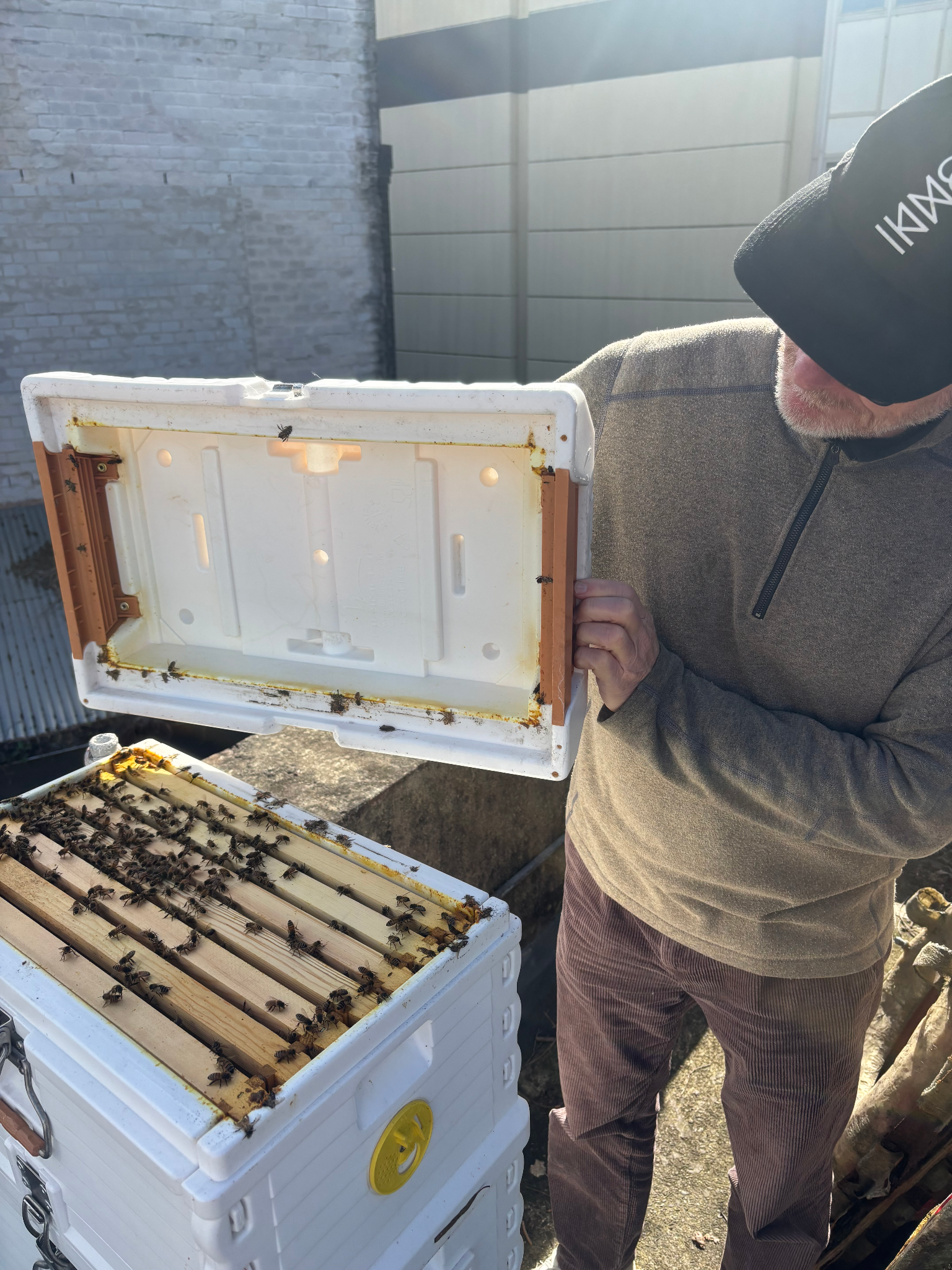
• Bjorn inspecting his beehives
When it comes to the experience of tending to these urban bees, Bjorn told me that the actual management of the hives themselves is not too difficult, but they do need to be checked regularly. These inspections allow him to examine the bees, confirm that the colony is active, and check for signs of pests or diseases. The actual harvesting of the honey is also very manageable once you understand the process and equipment involved. Even though Bjorn did tell me that he does wear a protective bee suit when he opens his hives, and sometimes bees are able to find their way inside of the suit, he still describes the bees as relatively harmless when handled calmly and under control. Bjorn also explained the role of the queen, which lives for roughly 3 years as she lays the eggs that sustain the colony. He also mentioned that any bee has the potential to become the queen, as any female larva can develop into a queen based on how they are raised and fed.
When it comes to the pests and diseases that are important to monitor that I mentioned before, one of these stands out above the rest. The Varroa mite, particularly the Varroa destructor, are small parasites that attach to honey bees and reproduce inside of capped brood cells, where young bees are developing. Varroa mites feed on developing and adult honey bees, weakening individual bees and eventually threatening the survival of an entire colony. Overseas, they are also known to spread damaging bee viruses. Bjorn explained that severe infestations can leave a colony weakened and may result in visibly unhealthy or deformed bees. Bjorn has experienced issues with these parasites in the past, as the Varroa mite has already contributed to the loss of three of his colonies. After these colonies were destroyed, ants moved in and took over the remaining hive. When checking the hive, Bjorn told me that seeing dead or deformed bees near the hive are a strong sign of Varroa mites, but infestations may also be happening before any visible symptoms appear.
So obviously the Varroa mites are a huge problem, so what can be done to manage these outbreaks?
When talking with Bjorn, he told me that he uses treatment strips in the hives to help manage the Varroa mites. These strips contain miticides that are designed to kill the mites through contact, as the bees spread the miticides throughout the colony. These strips should be combined with regular monitoring to be the most effective.
NSW guidance also recommends that beekeepers should use an integrated approach that could include chemical treatments, cultural controls and continued testing after treatment. The choice of treatment depends heavily on whether brood is present, whether honey is being collected and the stage of the colony’s development. These strips should not be treated as a permanent cure, but as a strong part of an overall management system.
You may be wondering, how could I start a similar rooftop bee farm?
Based on Bjorn’s experience, along with registration and biosecurity guidance from the NSW Department of Primary Industries and Regional Development, here are a few tips:
● Check local council requirements, beekeeping rules and if your building owner permits rooftop hives.
● Register as a beekeeper and learn about your responsibilities before getting started.
● Get some training from an experienced beekeeper, especially with the rise of Varroa mites.
● Choose a secure rooftop that limits public access and keeps bees away from children.
● Make sure the rooftop is accessible to the beekeeper and the tools needed.
● Obtain hive boxes, frames, protective clothing, and honey harvesting equipment.
● Start with a manageable number of colonies and inspect them often before adding more.
● Keep records of your inspections, honey harvests, mite tests, and queen health.
● Have a clear use for your honey, similar to in the cocktails at Knox Street Bar.
What we can see through Bjorn's work with the bee farm is that urban businesses can produce food (in this case honey), in small and overlooked areas. The bee farming provides Knox Street Bar with locally harvested honey, along with supporting pollination and encouraging conversations about urban food production. Even so, the loss of Bjorn's three colonies shows us that urban beekeeping requires considerable care, knowledge, and active Varroa mite management. Despite these challenges, Bjorn shows us how beneficial a small urban bee farm can be to both his customers and the nature surrounding it.
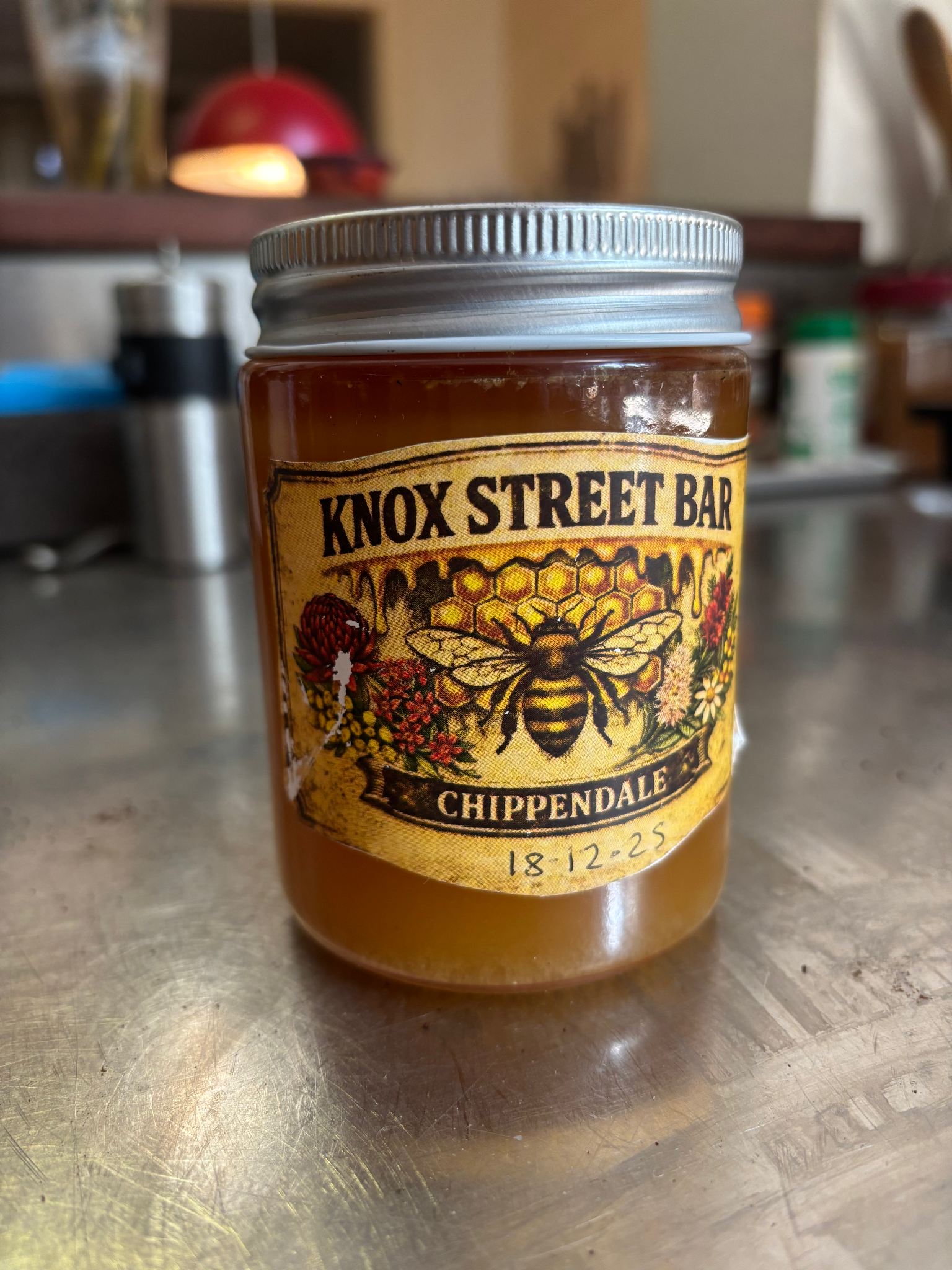
• Jar of honey from Knox Street Bar
Thank you to Bjorn for showing me the hives and sharing his experience.
- Gabe Weitzer
Intern with Sustainable House
References and further information
Australian Government Department of Agriculture, Fisheries and Forestry. (2024). Pest profile: Varroa mite.
https://www.agriculture.gov.au/about/news/three-chiefs-newsletter/pest-profile-varroa-mite
NSW Department of Primary Industries and Regional Development. (n.d.). Varroa mite management.
https://www.dpi.nsw.gov.au/animals-and-livestock/bees/varroa-mite/varroa-mite-management
NSW Department of Primary Industries and Regional Development. (n.d.). Actions for Varroa mite monitoring and chemical resistance management.
https://www.dpi.nsw.gov.au/animals-and-livestock/bees/varroa-mite/managing-your-hives-with-varroa/chemical-resistance-management
NSW Department of Primary Industries and Regional Development. (n.d.). Beekeeper registration.
https://www.dpi.nsw.gov.au/animals-and-livestock/bees/beekeeper-registration
Service NSW. (2026). Apply for a beekeeper registration.
https://www.service.nsw.gov.au/transaction/apply-for-a-beekeeper-registration
Godwin, B. (2026). Personal interview about the rooftop beehives at Knox Street Bar, Chippendale.