
by
Kiersten Engstrom
Intern with Sustainable House
Key points:
Simple water and energy appliances cut amounts and costs for householders across Australia
But in the United States, where I live, most householders cannot win these savings because the fittings and appliances aren’t installed
When living abroad in Australia these last three months I began to notice and compare everyday aspects of my life to those at home.
While working in this internship I became hyper aware of ways we could conserve energy and water because I was constantly surrounded by the talk of it while working in Sustainable House.
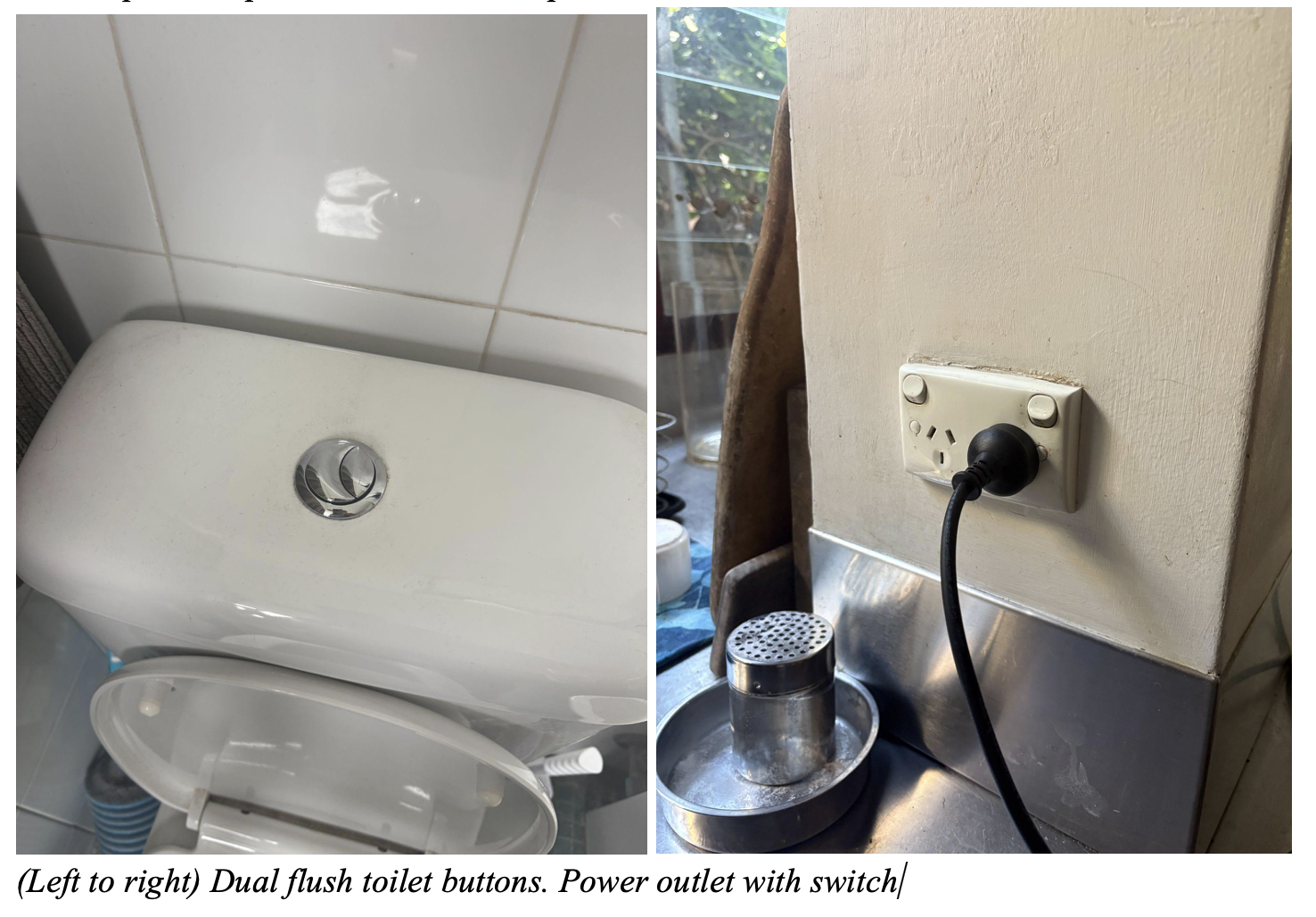
A small but big difference in daily impacts between Australia and the United States is that Australia has dual flush toilet systems and wall switches for electric outlets. While both of these are such simple technologies their implementation - required in households across the country - saves huge amounts of water and energy and also cuts household living costs.
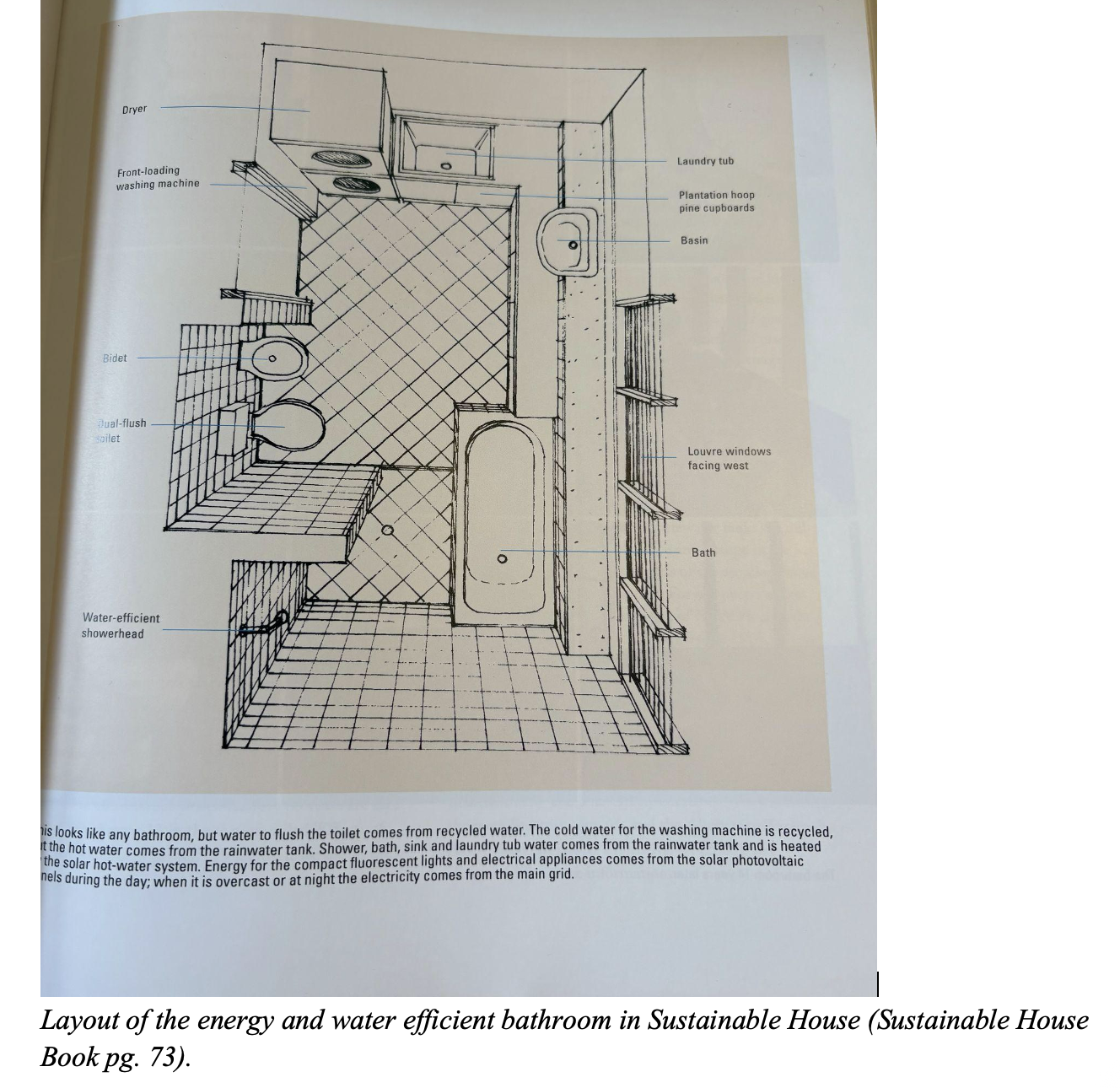
First we have the dual flush toilet - in every house and apartment and most cafes, hotels and restaurants.
This just means that when you flush you have the option between a normal flush and a half flush. A full flush toilet uses about 11 litres per flush. If on average people use the toilet 7 times per day, that's 77 litres of water per person per day. That's roughly 40 large soda bottles of water per day.
When we use the dual flush that full flush is only 4.5 litres per flush and a half flush is just 3.
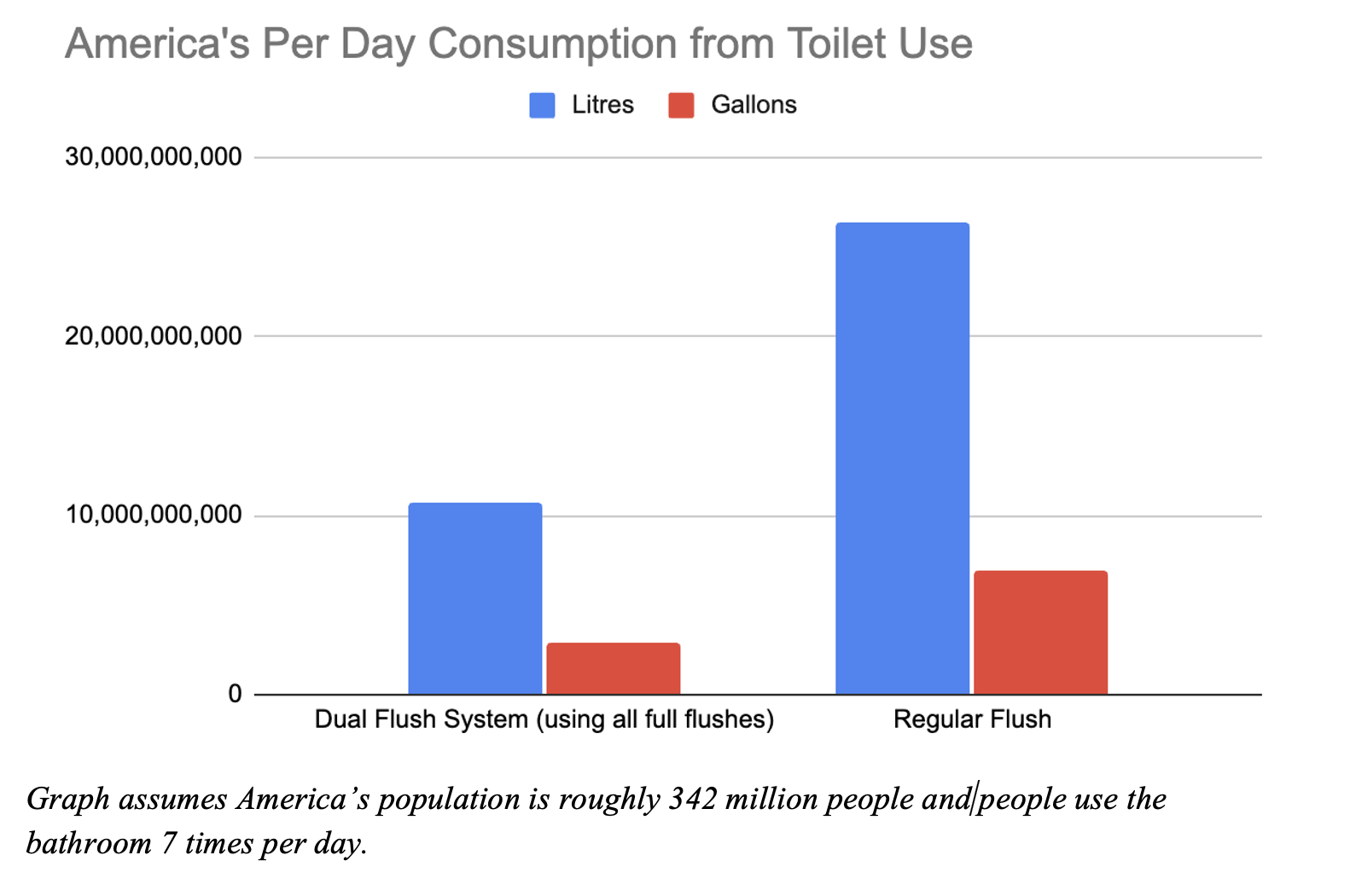
If I were using the full flush function then, with 7 toilet uses per day, I would still be saving 45.5 litres of water a day.
With about 100 people using the dual flush system on a daily basis they would save 1,100,000 litres each year.
With America’s population being roughly 342 million people if we were to do the math having all toilets in America as dual flush systems we could save 3,766,945,100,000 litres of water annually. New housing can have these appliances, surely?
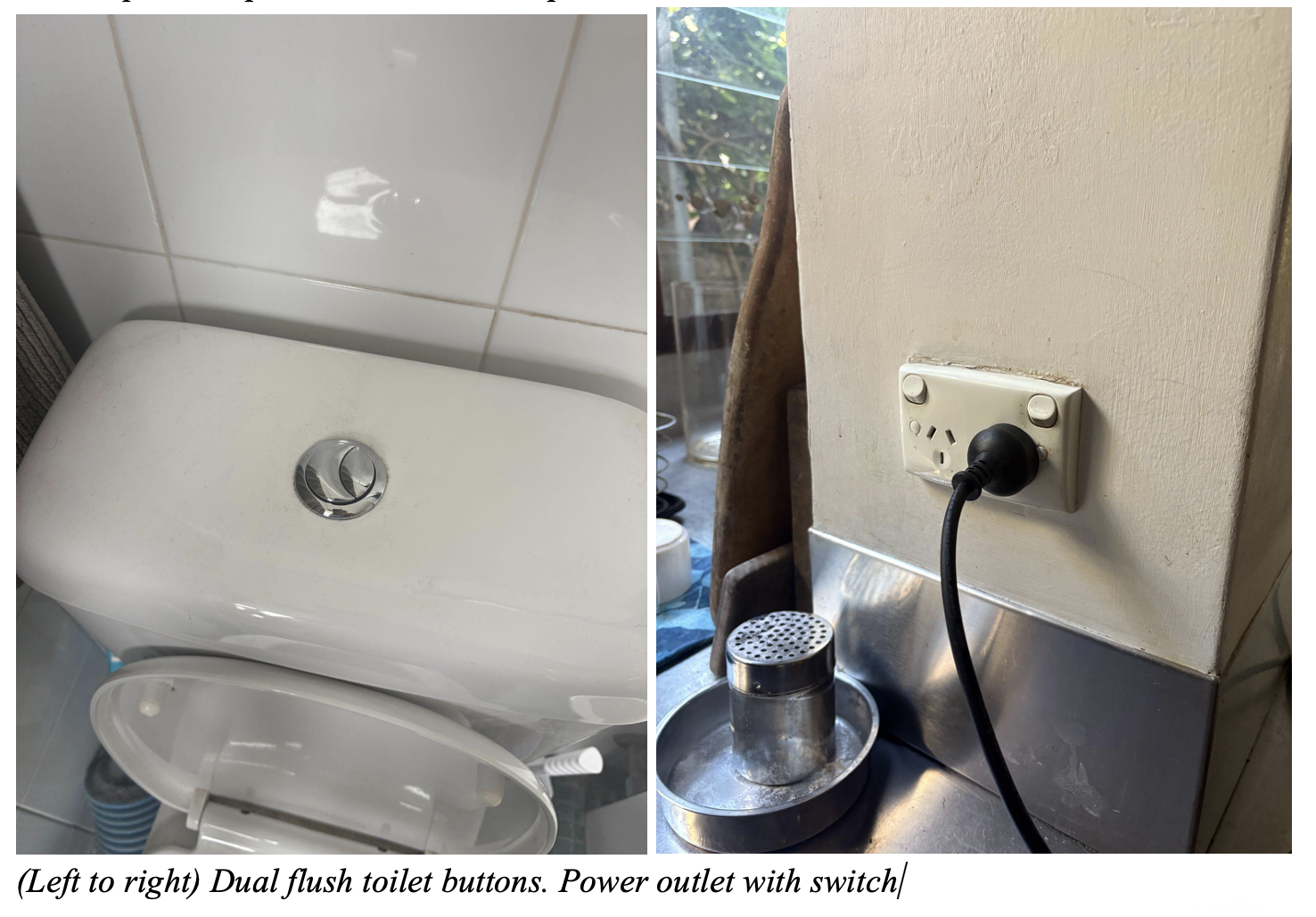
The second widespread simple technology in Australia is the outlet wall electricity switch.
While this is standard practice in Australia it is very much unheard of in the United States.
The use of outlet switches significantly reduces the amount of “vampire power” that is being used.
Vampire power is the energy being used by appliances that appear to be off or are in “standby” mode. Vampire power accounts for around 10% of our energy bill and we could be paying over $100 a year for unnecessary power. By using outlet switches regularly we can decrease the amount of power being used and therefore lower our bills.
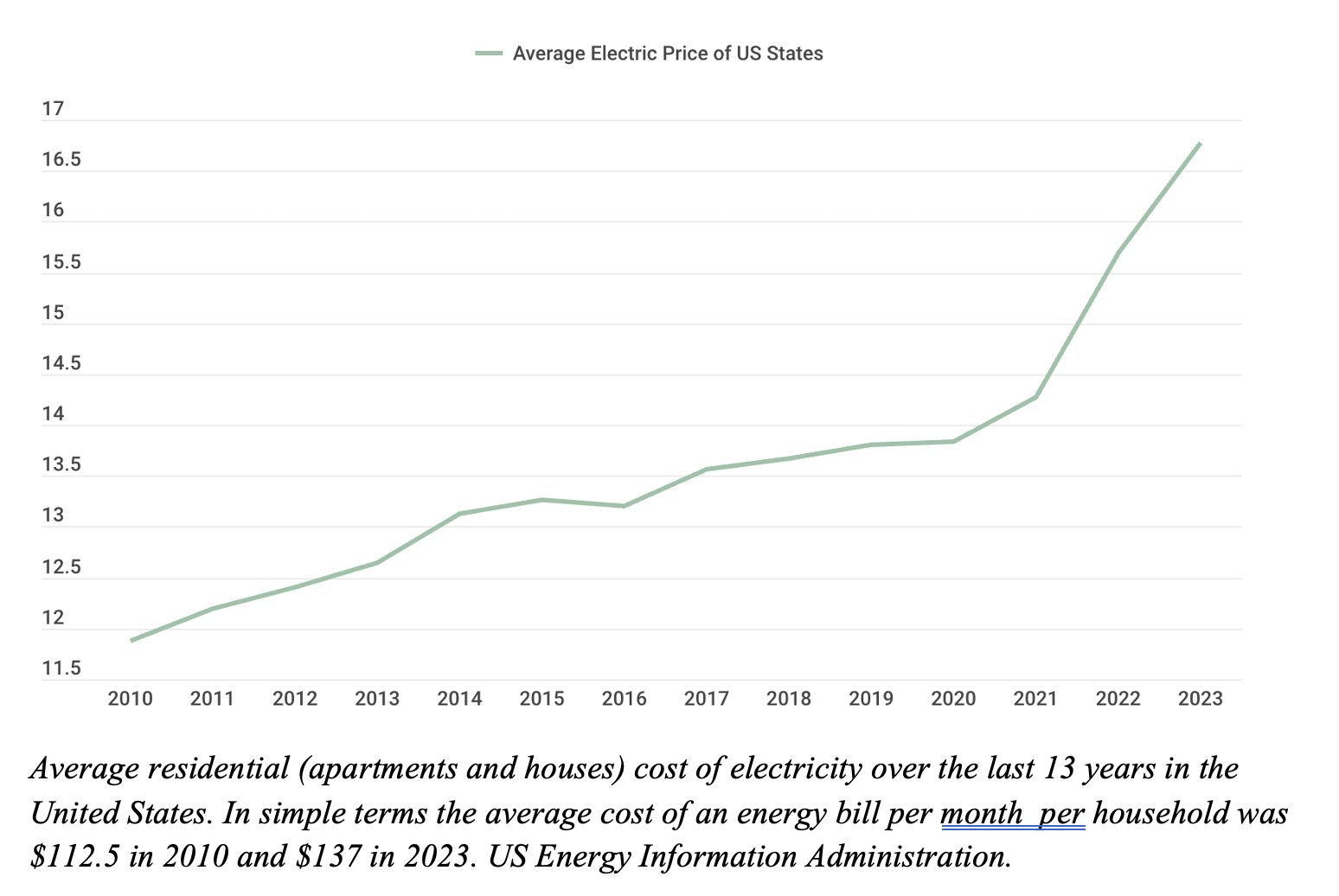
Over the last 13 years, the average residential cost of electricity in America has increased 41.5% because of the increase in electronics available and increased cost of electricity. This means that it’s even more crucial to make sure electricity is not going to waste.
Just as we can get water efficient toilets, water efficient fittings are available.
For example, Sustainable House has a water efficient showerhead which uses airflow drawn into the shower water as it passes by the hole in the showerhead that speeds up the pressure while reducing water use. Air-filled droplets burst on contact with the person as they shower. The showerhead uses 7 litres of water per minute whereas an average showerhead uses around 20 litres of water per minute.
The New South Wales Government requires all new homes, homes undertaking renovations of $50,000 or more, or those installing a pool or spa of more than 40,000 litres to obtain a BASIX certification.
A BASIX certification aims to reduce environmental impact by requiring builders to meet certain minimum standards for water and energy efficiency, and thermal performance. They also must report on construction materials being used so their embodied energy can be calculated.
The sustainability standards for new residential buildings include increasing thermal performance standard 5-5-6 stars to 7 stars and reducing greenhouse gas emissions by 7-11%. An average home meeting the BASIX standards will save $1,070 per year in energy bills and have $678 extra to spend each year.
by
Kiersten Engstrom, intern with Sustainable House
References
Saving Water: Make it Your Business Amenities, Government of South Australia
BASIX | Planning Portal - Department of Planning and Environment. (n.d.). Www.planningportal.nsw.gov.au. https://www.planningportal.nsw.gov.au/development-and-assessment/basix
Does it really matter if I switch off appliances at the wall? (2019, December 6). Www.abc.net.au. https://www.abc.net.au/news/2019-12-07/how-can-i-reduce-my-power-bill/11675970
Is switching off appliances at the power point really worth the effort? - ABC News. (2023, March 6). ABC News. https://www.abc.net.au/news/2023-03-07/appliances-worth-switching-off-at-power-point/102041234
Mapping Vampire Energy | SaveOnEnergy. (2024, October 25). SaveOnEnergy.com. https://www.saveonenergy.com/resources/mapping-vampire-energy
NSW Government. (2023). Sustainability standards for residential development (BASIX). Planning. https://www.planning.nsw.gov.au/policy-and-legislation/buildings/sustainable-buildings-sepp/sustainability-standards-residential-development-basix