
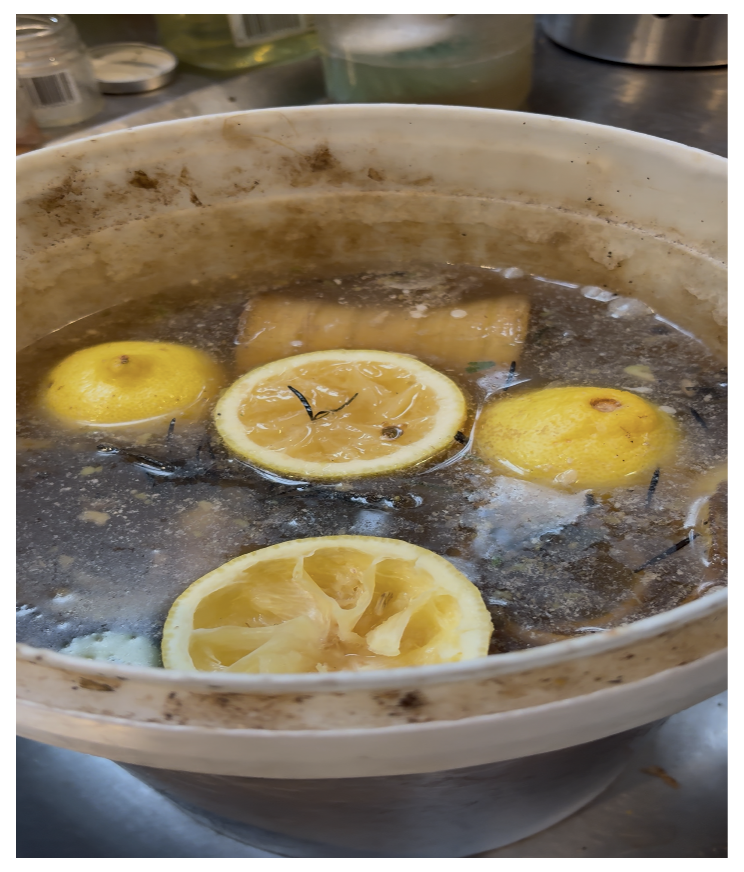
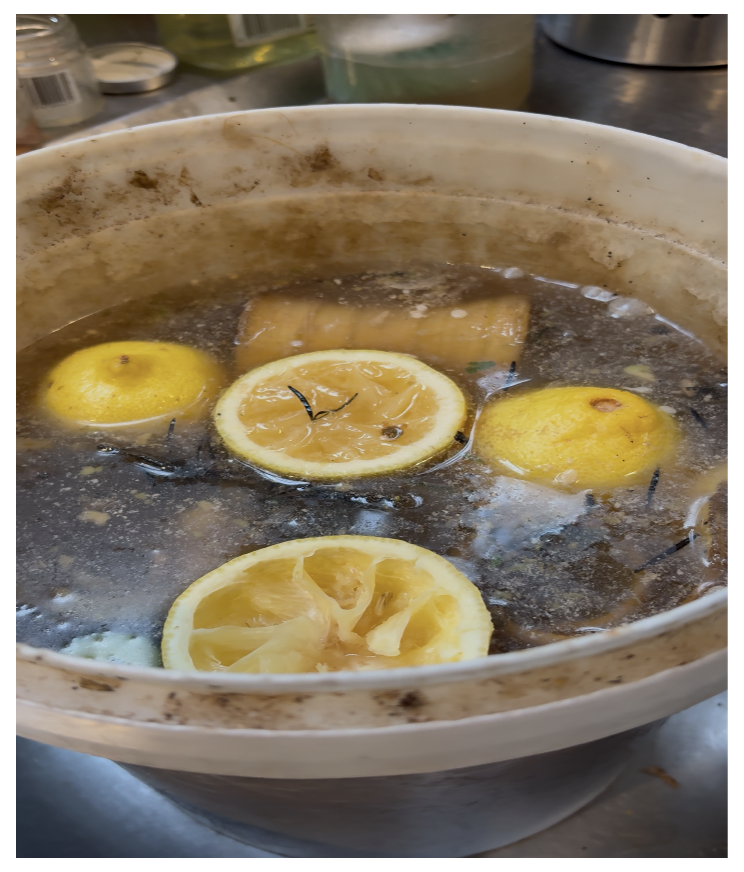
• Lemon peels, banana skin, washing up water and other food waste collected in the bucket in the kitchen sink. I dumped this bucket load into a coolseat on the street outside the house where I’m interning in Chippendale
Kiersten Engstrom, intern with Sustainable House in Chippendale, Sydney, Australia, says how and why she values composting and the power we ordinary people hold in bringing wellbeing to Earth’s environment.
When life gives you lemons . . .
. . . you make lemonade?
No, you compost them!
Food waste takes up around ⅓ of all waste in Sydney City Council’s area, and is very easily avoided by composting it. The council area is one of over 20 or more council areas which together make up the city of Sydney, the capital city of New South Wales in Australia.
Compost is a nutrient rich soil conditioner that improves soil structure, increases water retention, increases tree shade and height, and boosts plant health. By composting we can then use the compost to grow other plants like pretty flowers or food for our tables.
One great way we can compost in our community is with coolseats which are also garden beds we can put on the street, on an apartment balcony, outside cafes or in our garden. Coolseats are rat proof and provide free soil-making and fertiliser production for local use. They need have no energy to install - no tradespeople, no forklift - or for maintenance and almost none for watering. Anyone can assemble them in about an hour after they arrive flat packed from the Australian fabricator in Melbourne, Mrfoxinabox.
The seats and garden beds harvest and store rainwater. The rainwater cools the compost and garden bed therefore cooling the worms. Happy worms equals happy composting. Cool seats provide not only a service to the environment but also to the community. They allow people in the neighbourhood to have a nice place to relax and enjoy a chat with a neighbor.
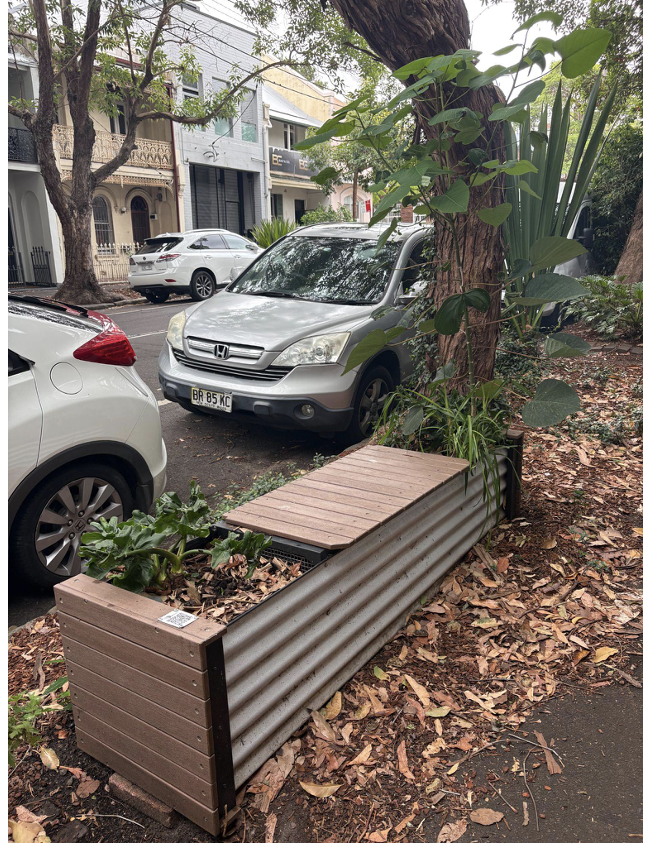
• Cool Seat outside the house where I am interning
So what kinds of things can I compost?
Any sort of kitchen scraps such as fruits and veggies, old bread, coffee grounds, or egg shells. We can also throw in paper goods like toilet rolls, card boards, paper towel rolls, and old napkins. Make sure to cut or tear cardboard into pieces no bigger than your hand so they decompose faster. At a local cafe, Cafe Guilia, I take any food waste from my plate and put it into one of the coolseats on the footpath outside the cafe.
Here’s my lunch from today at Cafe Guilia. Since I have a few scraps left over I’m going to take them to the compost bin. Now the worms get a nice lunch too!
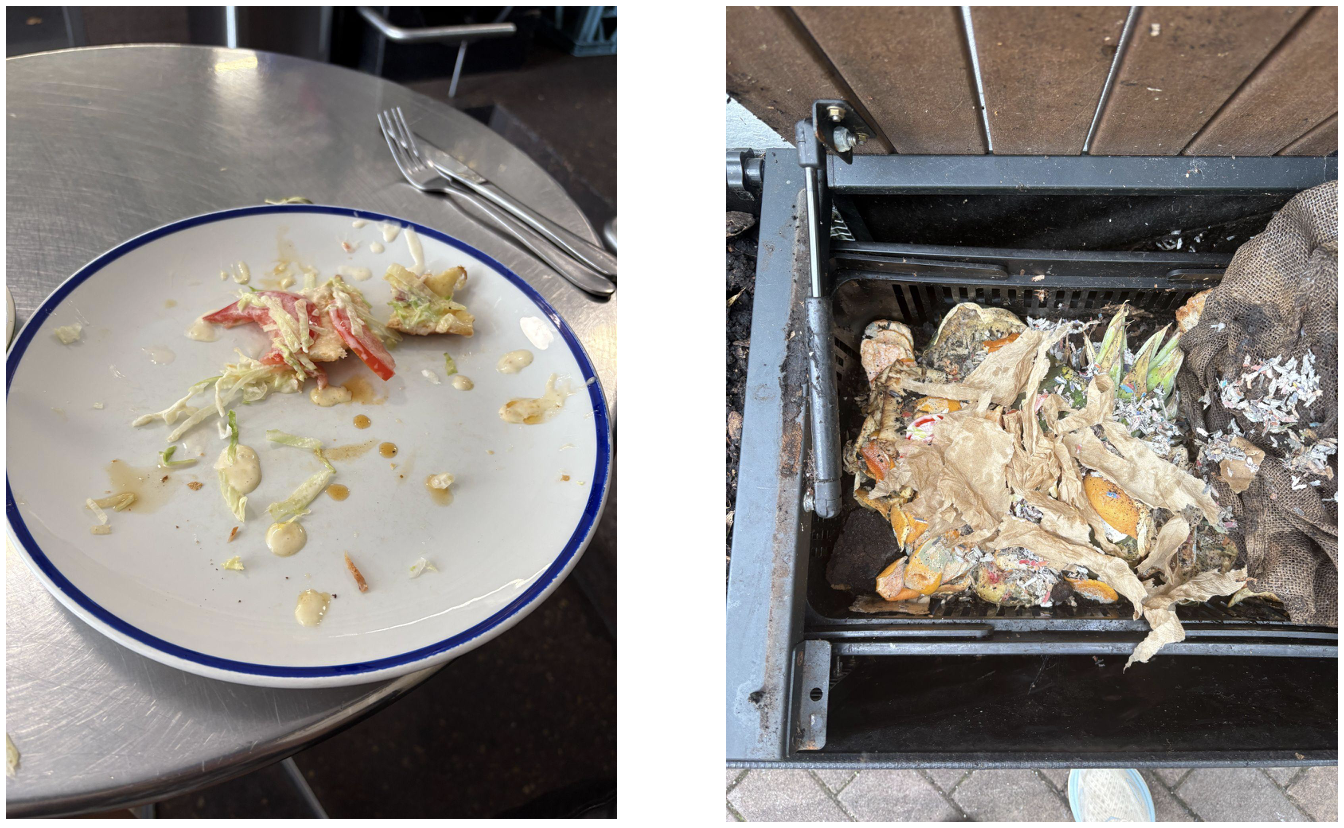
• The image on the left show’s food scraps from my lunch at the lovely Cafe Giulia in Chippendale. After lunch, I brought my plate outside and emptied the food scraps into the cool seat, pictured on the right. No food waste!
So how does compost prevent climate pollution - methane and CO2 emissions?
By decreasing food waste through composting we eliminate the need for FOGO bins, garbage trucks to collect the food waste and other bins, and for more trips by the garbage trucks to processing plants.
FOGO bins or Food Organics and Garden Organics are bins here in Sydney designed for food scraps. With less trash pickups from the elimination of FOGO bins we emit less CO2 into the atmosphere. Any food waste system that uses a garbage truck can only harm out lovely Earth. Whenever the trash trucks come they have to stop every 10 to 15 metres in what is typically a 100 k round trip. This releases nasty gas such as CO2 and other pollutants into our atmosphere. Garbage trucks utilize a litre of fuel every kilometer because they are so fuel hungry, even electric garbage trucks use large amounts of energy.
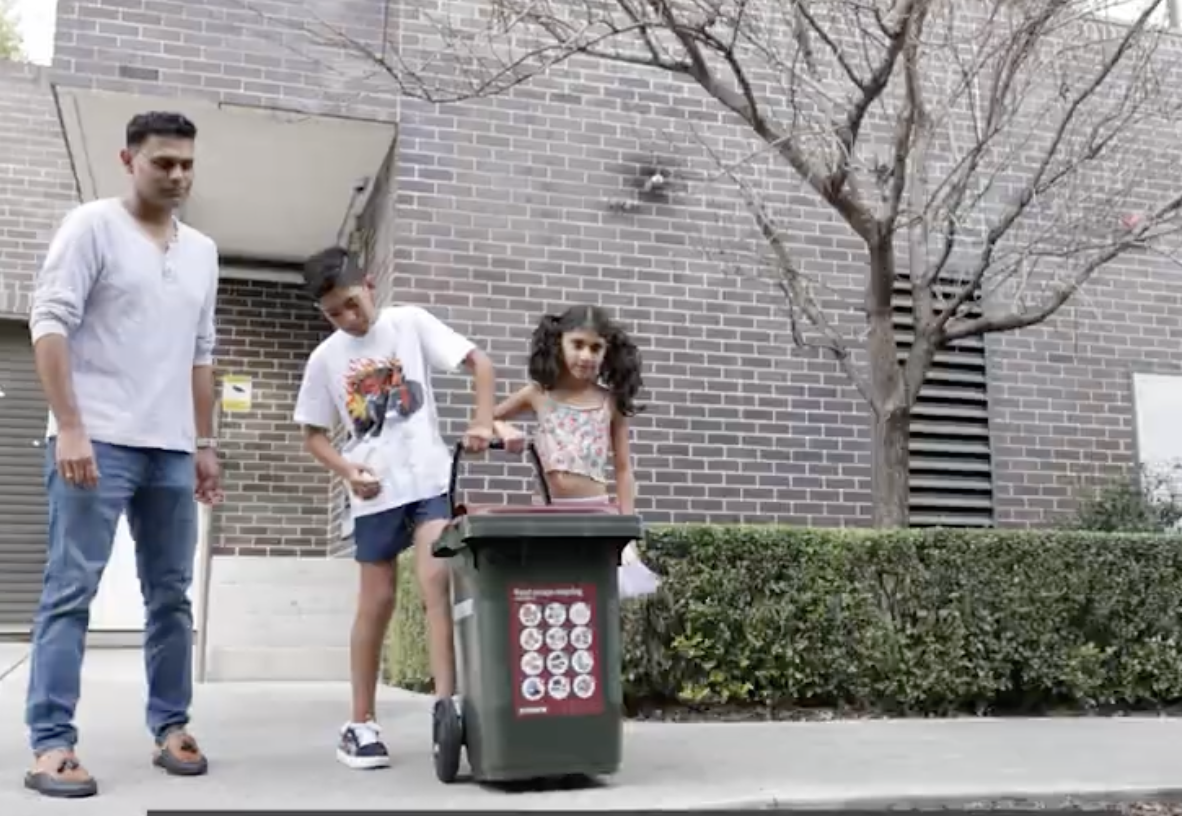
• Sydney City FOGO bin on footpath ready for Council garbage truck to pick up
Let’s compare pollution from FOGO and council garbage truck pickups with home, apartment, office, cafe composting. Look at the graph below. It shows climate pollution from Sydney City Council’s food waste in the garbage collected by trucks.
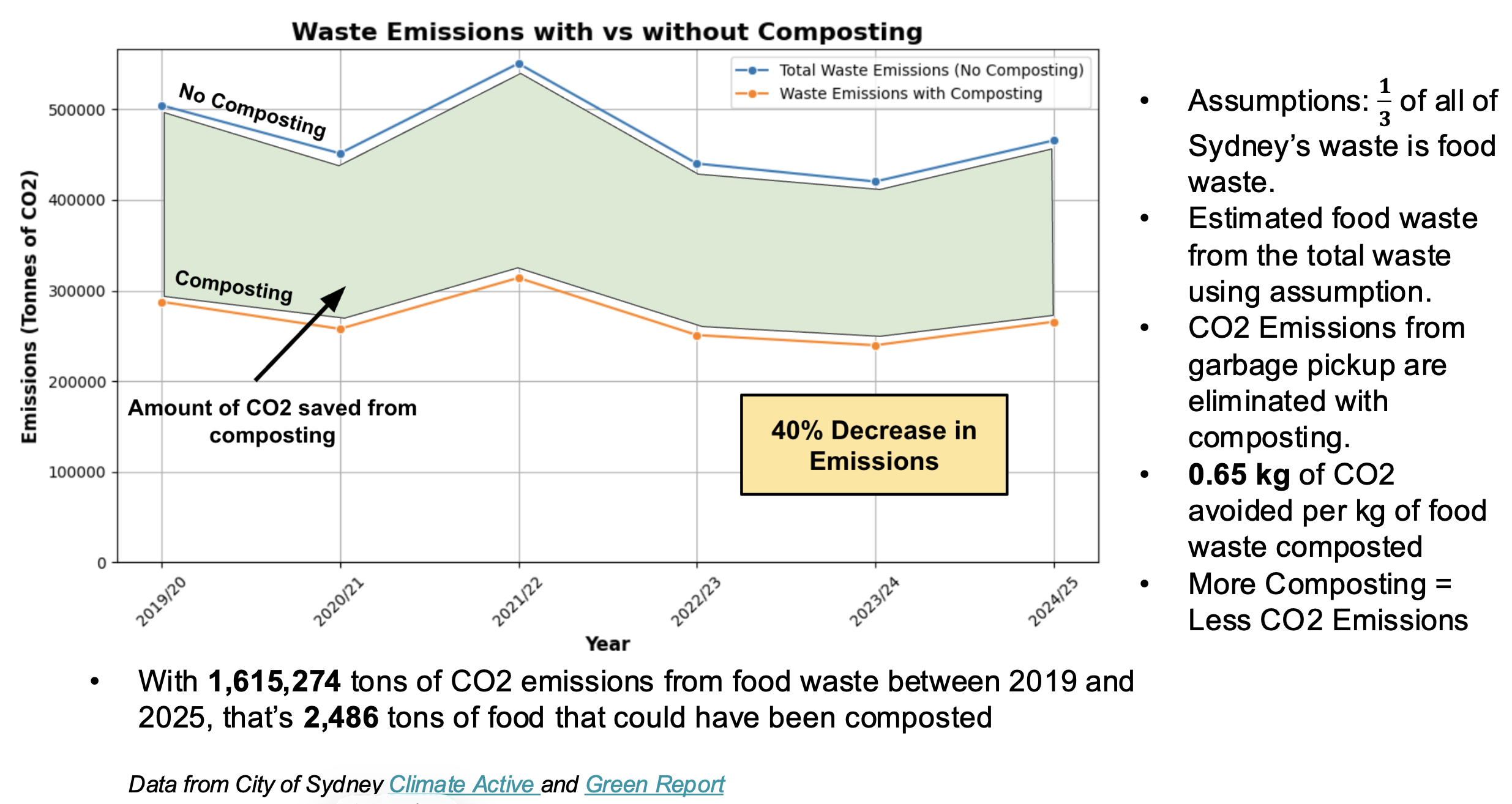
• Pollution by Sydney City Council from food waste in its garbage system with trucks, including its food waste recycling
As shown in the graph above, by composting at home and where we live and work we’re eliminating FOGO garbage truck pickups transport anbd landfill emissions, and waste processing. All of this produces tons of CO2 emissions.
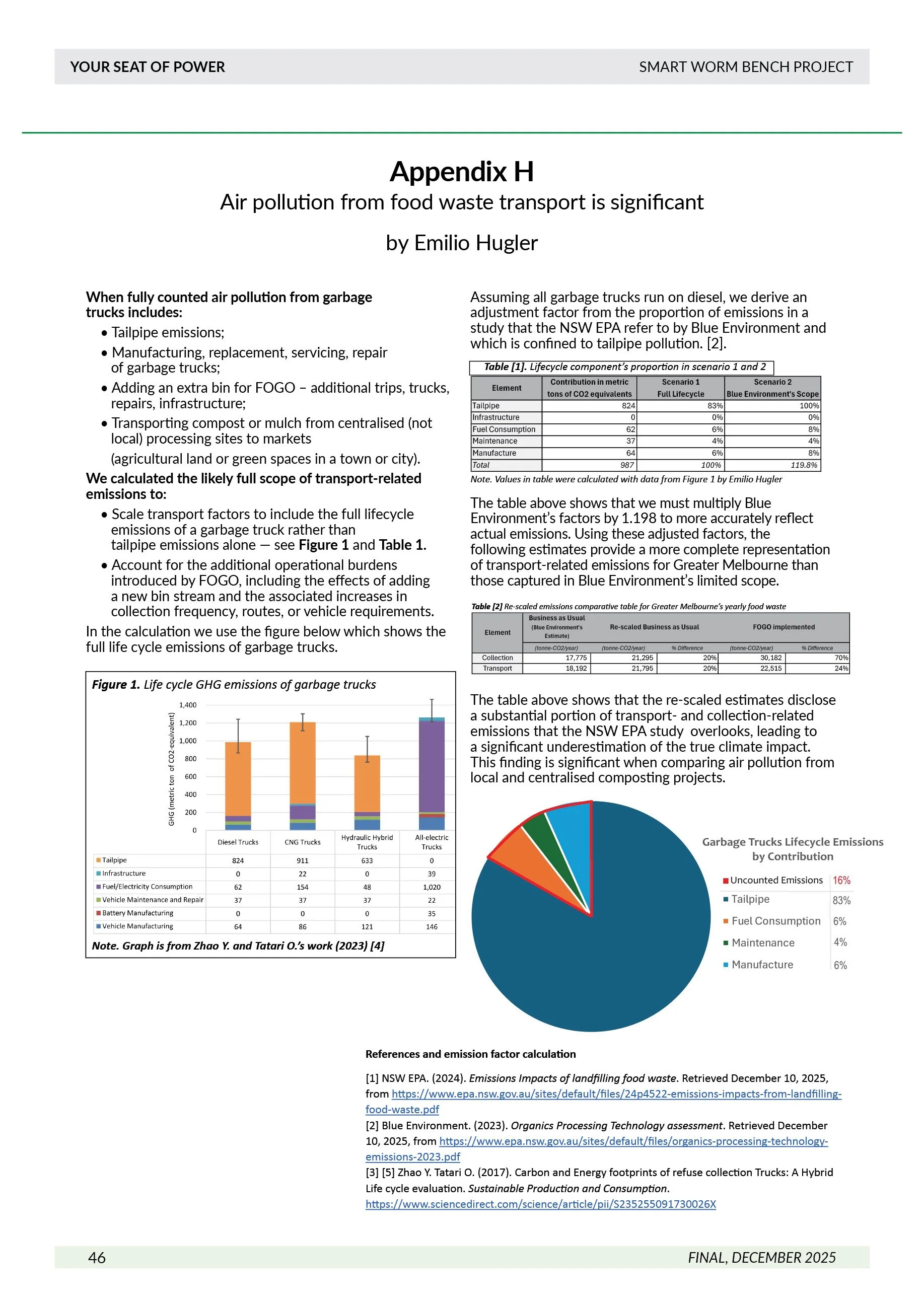
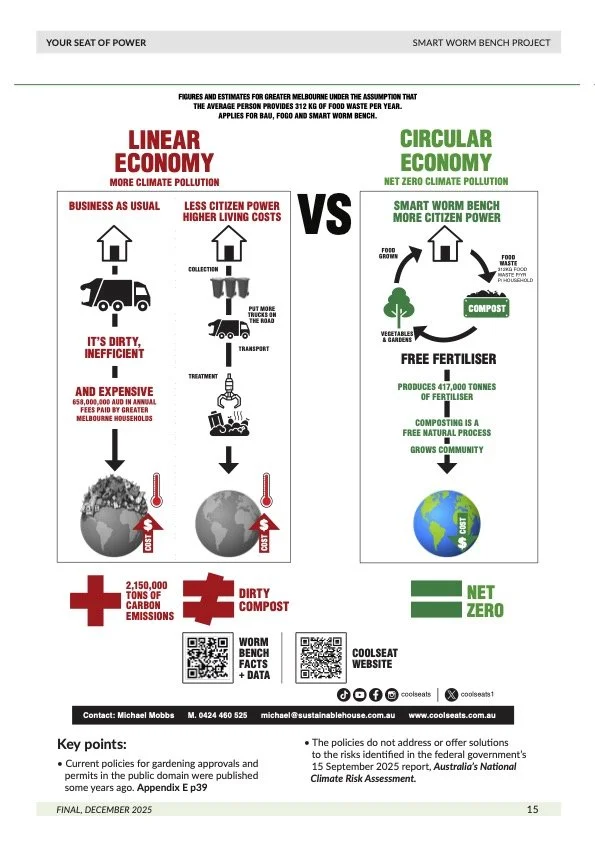
•. Net zero energy use with composting at the thome of orrice or school v. truck driven food waste
By eliminating FOGO and composting instead at home, apartments, cafes we’re creating a happier environment - because we talk more and connect more in our streets - and also a healthier place for everyone.
If we were to have composted all our food between 2019 and 2025 then we would have saved over 1.5 millions in CO2 emissions just in the city of Sydney. That's roughly the amount of CO2 emitted by driving 3.75 billion miles in an average gasoline powered car.
While FOGO bins do serve a good purpose, what we can do for the environment where we live, right in our neighbourhoods and for ourselves is astronomically better. You, me, and all of us have the power to reduce CO2 emissions exponentially. So next time you go to toss something in the bin, think about the power you hold and try to compost.
By
Kiersten Engstrom,
Intern with Sustainable House, Chippendale, Sydney, Australia