
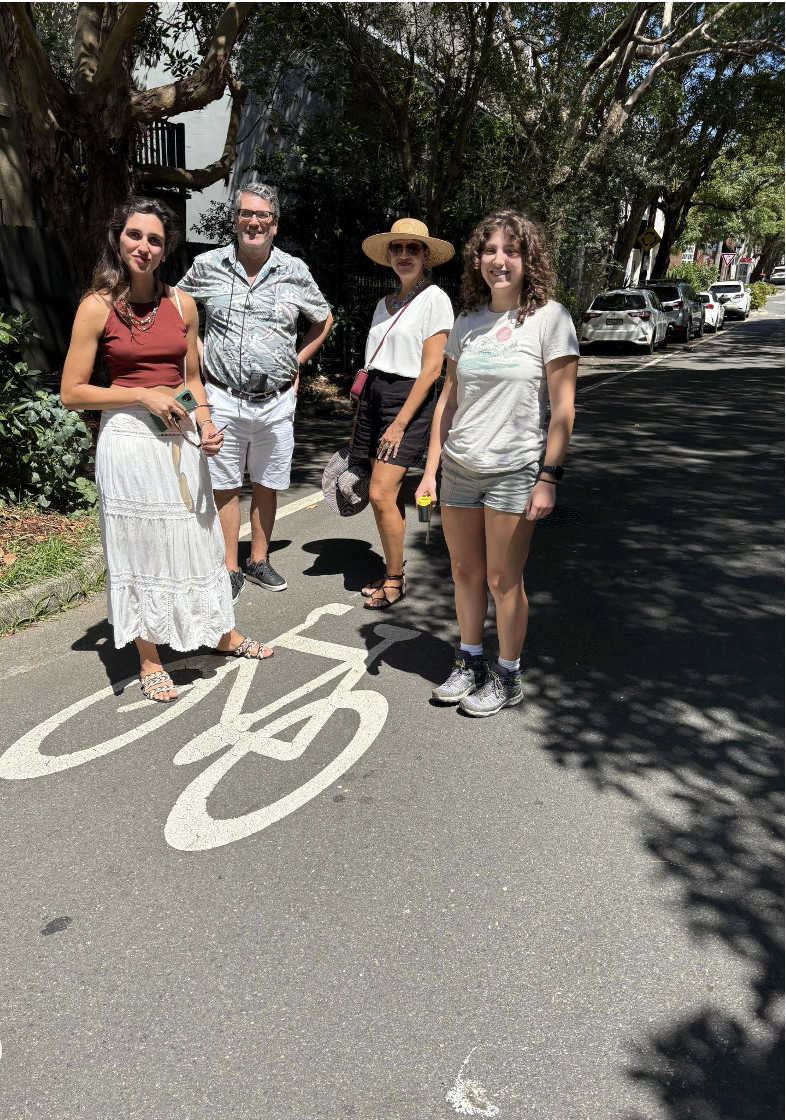
Kiersten Engstrom, intern with Sustainable House in Chippendale, Sydney, Australia, compares streets here with streets in her hometown, Pittsburgh, US.
Streets. We live on them, we walk on them, but how do they help us understand a city?
They’re often seen as just a path, but streets tell us so much more than that. Each city has their own unique energy, people, and culture. This is all reflected in their streets. They represent what a city values and tells a story about the people who live there and their way of life. How do streets differ between places and what do they allow us to understand?
As a student from the University of Pittsburgh, I am accustomed to the bustling life of city streets and culture. That being said, after arriving in Sydney, there are many differences I noticed from the streets that I call my home.
Chippendale, the neighborhood where Sustainable House is nestled, is an oasis of greenery. Even on the hottest days in Sydney, the trees provide shade, which makes the streets notably cooler. As you can see below the different temperatures between the asphalt out in the sun and the areas that are shaded by trees.
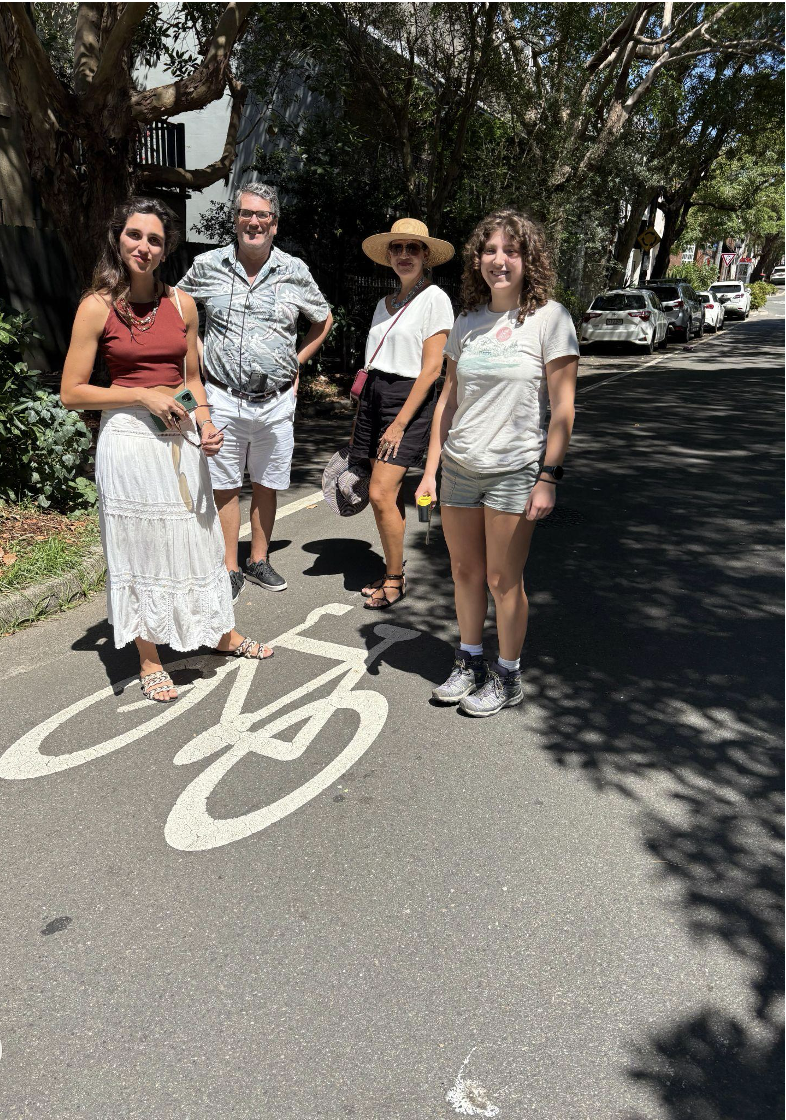
• I’m on the right, holding a temperature gauge. The other three people just knocked on the door of Sustainable House asking if they could have a tour, saying they were from Brazil. Marina, the daughter (no hat), is a sustainability consultant in Brazil and Michael said, “Yes”, straight away and we looked at the street before we toured the house. Marina bought both of Michael’s books so he was pleased with that; Sustainable House, and Sustainable Food.
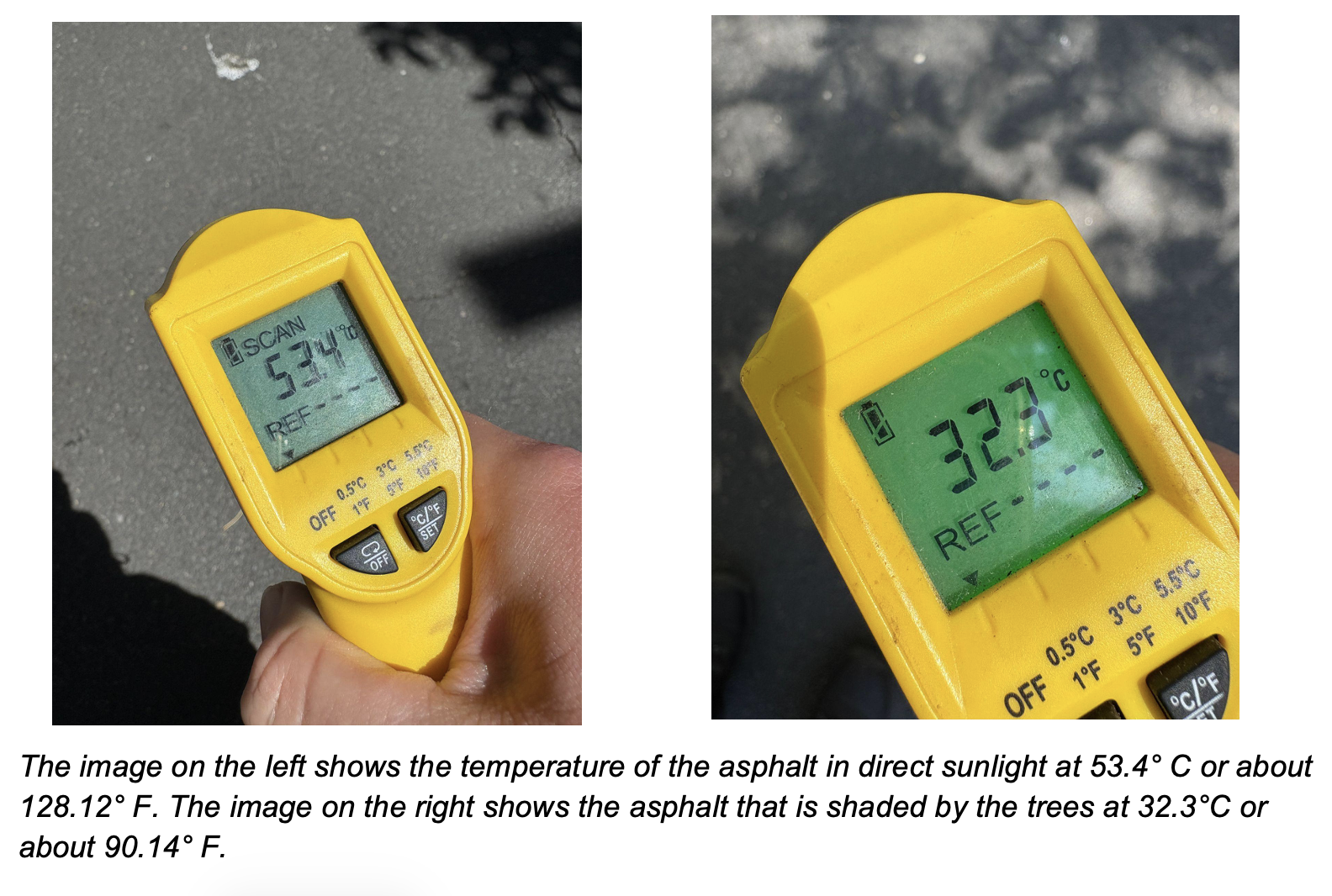
The two images above show the shaded and sunny areas of the road.
These canopies of trees surrounding the streets create lower temperatures for pedestrians and allow for more insect, bird, plant life and vegetation.
As shown in the thermometers above there is a significant difference - 21 degrees - between the shaded asphalt and the asphalt in direct sunlight.
Pittsburgh, lacking this abundance of trees, is often very hot in the summertime. I’ve had many times I’ve returned from class in late August, dripping in sweat from the grueling, beating sun.
In addition to the trees, Chippendale has many plants along the roads which flourish with the help of compost from the compost from the coolseats where locals put their household food waste.
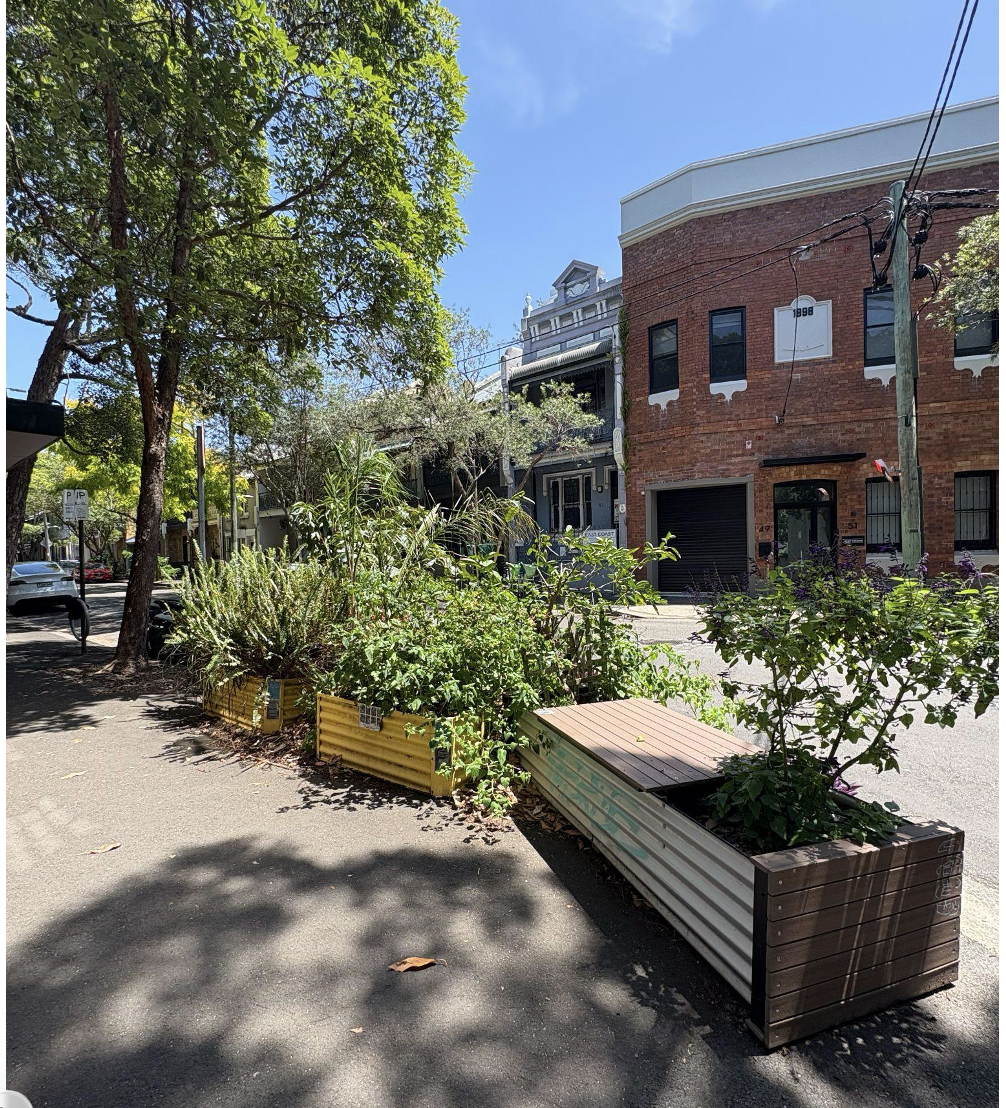
• On the right, a coolseat, many of which are along the roads of Chippendale just around the corner from Sustainable House.
Coolseats are part of the footpath gardening by the residents on the streets long with other plants and vegetation they plant and maintain.
Coolseats are rat proof although from time to time rats try to get in despite the steel mesh. Defeated by the mesh they stop trying. Coolseats provide free soil-making and fertiliser production for locals to use in the homes or the footpath gardens. Being delivered flat-packed and assembled on site by the locals they also have no embodied energy for installation or maintenance and almost none for watering. Wicking cells below the garden beds and compost baskets save 80% of water and watering time. The benches also harvest and store rainwater. The rainwater cools the compost therefore cooling the worms, too. Happy worms equals happy composting.
With Chippendale receiving 1594.6mm of rainfall a year, one coolseat is able to harvest 1151 litres per year. So the 16 coolseats in the footpath gardens save a total of 18,416 litres per annum. You could take a lot of baths with that, or grow a lot of plants!
On the other hand, Pittsburgh receives 975 mm of rainfall per year. If you were to install 16 cool seats in South Oakland Pittsburgh, you would save 11,267 litres per annum. That's enough water to flush a toilet almost 2000 times!
Not only do the coolseats provide a lovely place to sit and enjoy the neighbourhood, they are surrounded by beautiful flowers and other plants. Some of the planters even hold herbs, veggies and spices - food that will eventually be harvested and eaten. This unique technology is not only practical to help the environment by reducing food waste it also provides a lively atmosphere.
On the other hand, benches along the streets of Pittsburgh are nowhere to be found, let alone plants and other greenery. It’s a concrete jungle of sorts emphasising ‘efficiency’ over community.
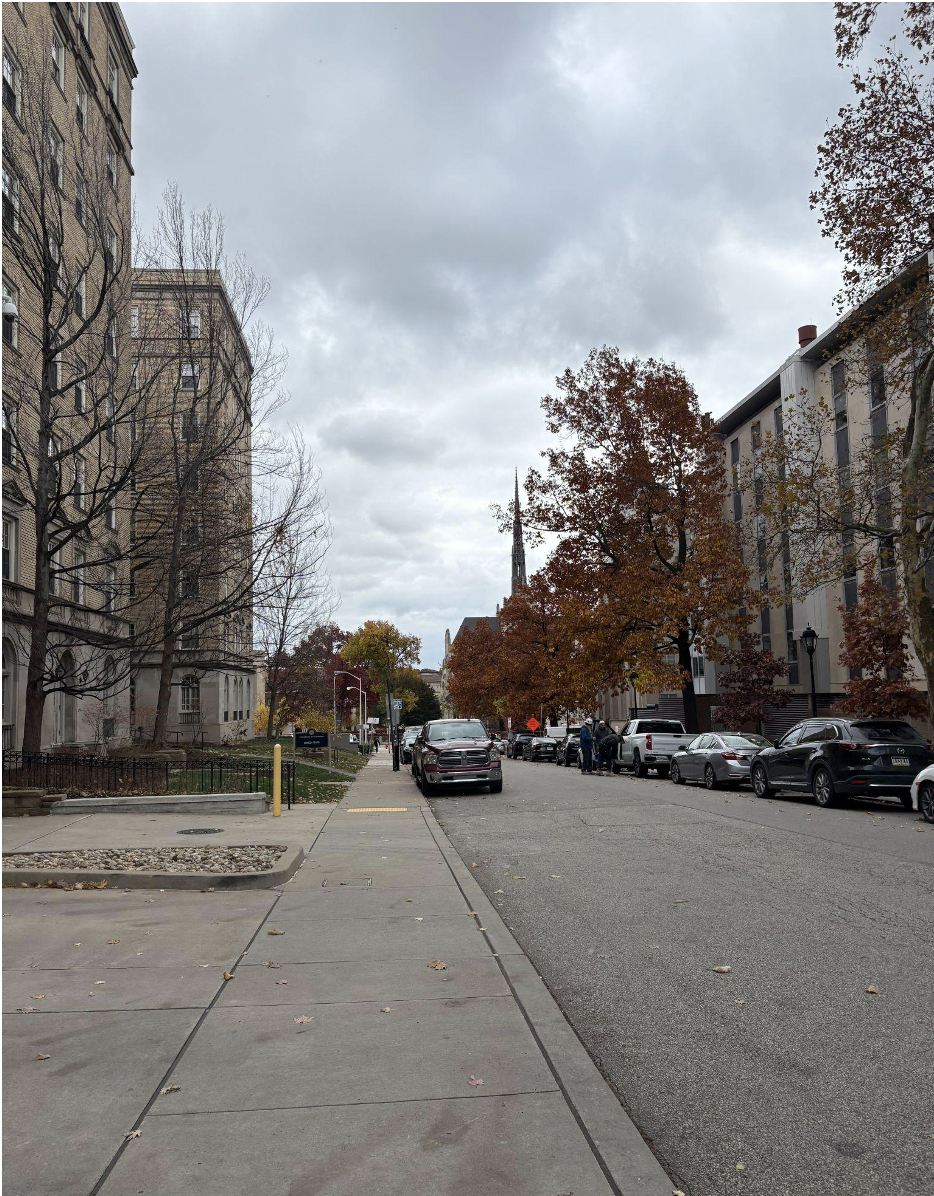
• Residential streets of Pittsburgh lacking in vegetation and greenery. Along with community areas such as benches
In February 2013, City of Sydney Council adopted a policy encouraging residents to green local streets and footpaths. It’s one page! Conditions are simple:
As long as the footpath remains accessible for pedestrians and other users.
As long as they comply with policy criteria, residents of Sydney’s Local Government Area are able to garden as they like.
By doing this the policy reduces or relieves the city’s responsibility to greenify areas and puts the power to help the environment into the hands of residents.
If we continue to adopt this in more cities, we will be able to not only enhance the visual aspects of the city but help the environment as well. Encouraging people to take matters into their own hands promotes learning and overall admiration for the environment and environmental conservation.
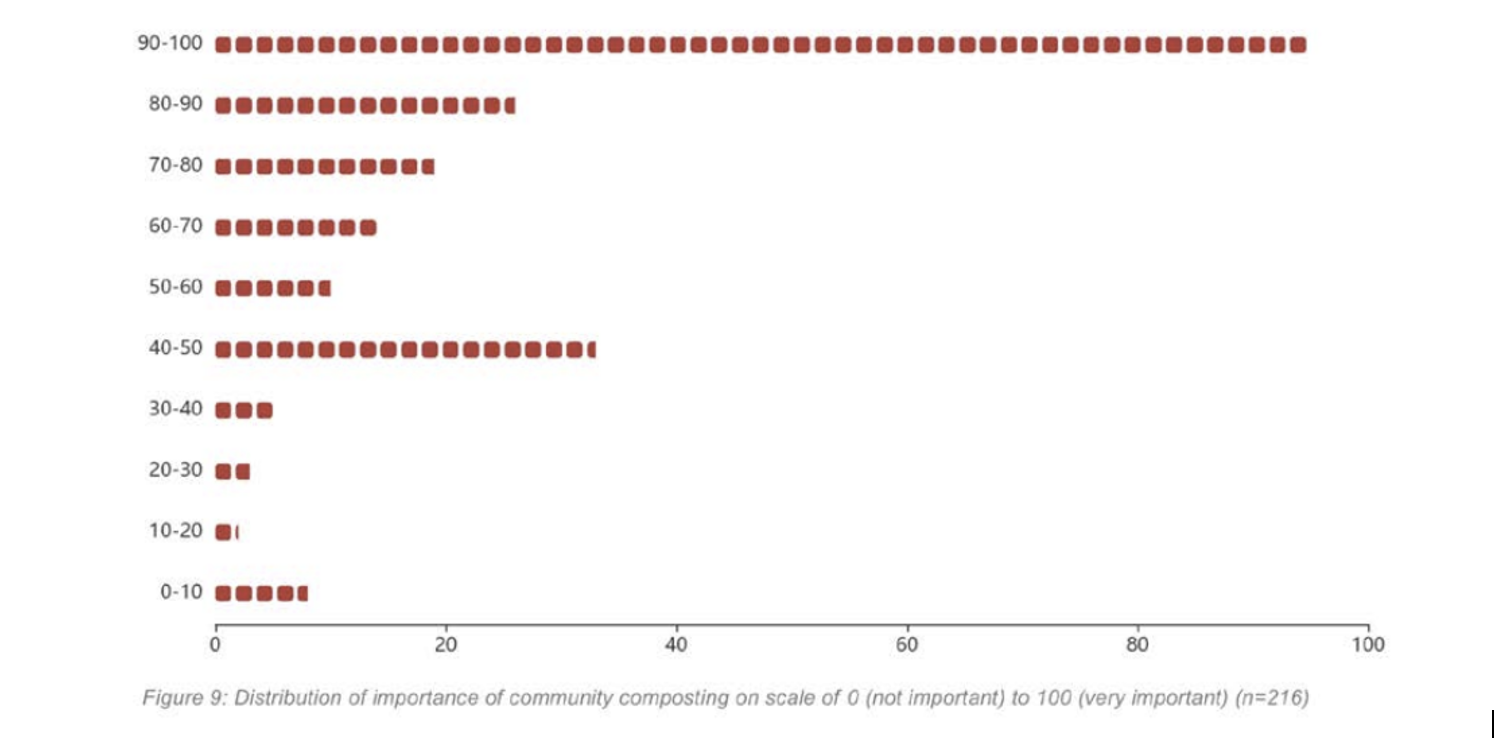
• In the graph above, residents were surveyed about what they believe the importance of composting was. Roughly 100 out of 216 participants believed it was very important. Composting for residents and businesses was the most important part of their footpath gardening
Implementing composting into local and community gardens benefits not only the environment but also the people allowing residents to decrease the amount of food waste they produce. As seen above there has been overwhelming positive support for composting which should encourage other governments to implement local gardens and composting throughout their cities.
People sit on the coolseats, people talk to each other (and me!) as we manage the coolseats or garden on the street. Gardening grows community - grows conversations between friends and strangers.
One thing I’ve found that Sydney and Pittsburgh have in common is their public transportation system.
Although since Sydney is a much bigger city, its public transport extends to ferries and trains as well but both cities are easily navigable by bus. Both systems are easy to understand and allow people to commute and explore areas of the city while also reducing emissions by lessening the number of cars on the road. That being said, I’m still getting used to Australian’s driving on the left side of the road, and it causes lots of confusion when trying to catch the bus.
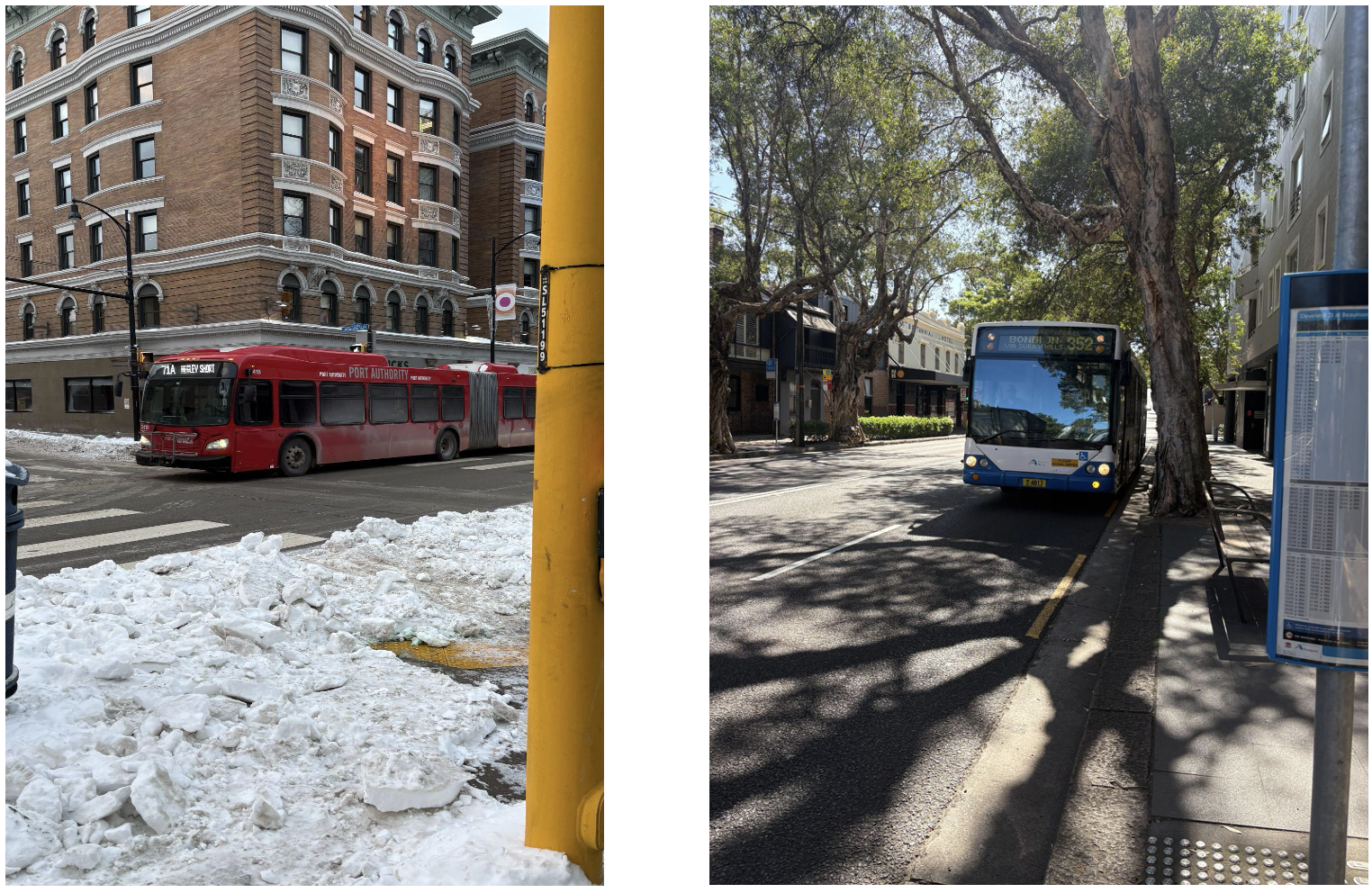
• The photo on the left displays an image of Pittsburgh’s public buses. The photo on the right shows an image of a Sydney public bus
Another thing that reminds me of home about Sydney is its beautiful parks. Taking walks in the morning, you often see other walkers, runners, or people out playing rugby. Pittsburgh is also home to many beautiful parks in which residents take part in the same activities, except for maybe soccer instead of rugby.
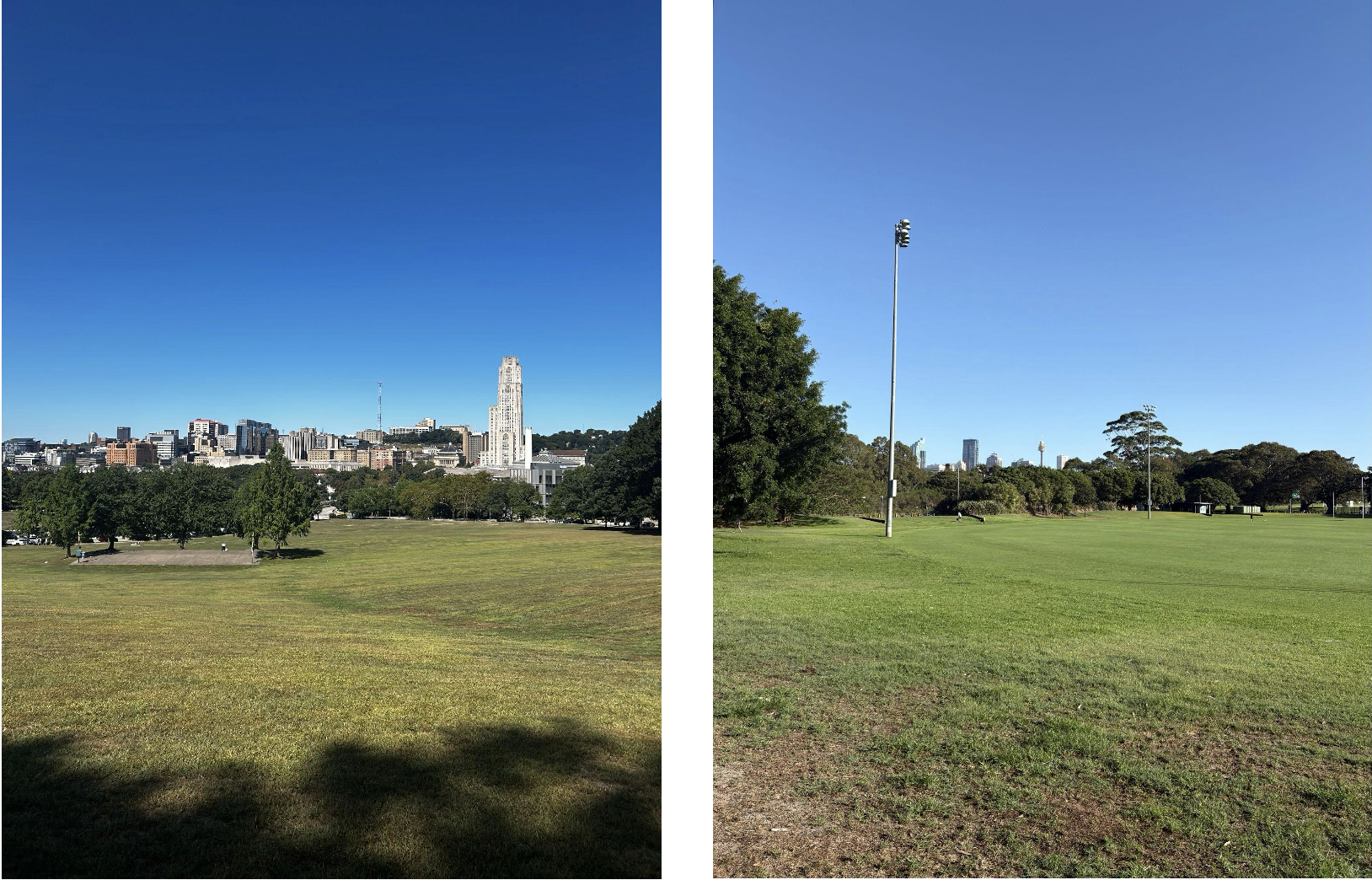
• The image on the left shows Pittsburgh's beautiful Schenley Park which is a very popular place to walk, run, and participate in other sporting activities. Image on the right is Moore Park in Sydney which has a variety of trails open to the public
Overall, there are many similarities between the two cities, which is hard to believe considering they’re ten thousand miles apart.
As I continue to explore Sydney, I hope to find my little slice of home among the verdant streets.
by
Kiersten
Intern with Sustainable House